Diving Ducks
Canvasback Ducks: The Aristocrats of North American Wetlands
Aug
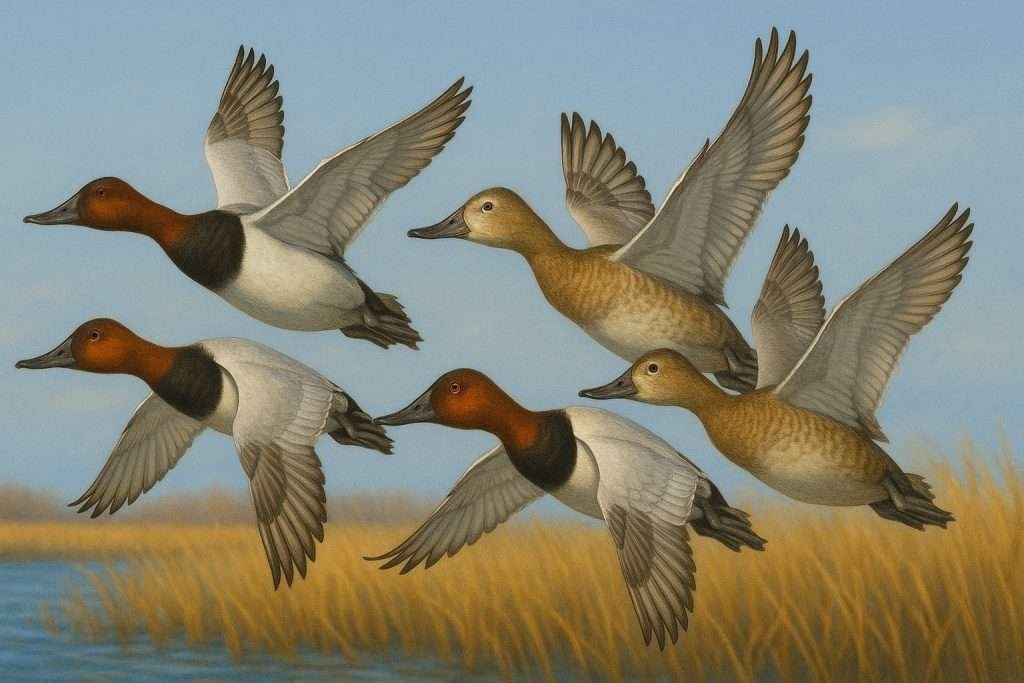
The Canvasback duck (Aythya valisineria) is a striking and elegant species native to North America, often admired for its regal profile, distinctive coloring, and powerful flight. Revered by birders, waterfowl hunters, and conservationists alike, the Canvasback occupies a unique niche in the waterfowl world—at once elusive, iconic, and utterly captivating.
In this post, we’ll explore everything you need to know about Canvasback ducks—from their physical features and behaviors to their habitats, migrations, and the conservation efforts working to ensure their future.
Introduction to the Canvasback
The Canvasback duck gets its name from the male’s light, canvas-colored back—reminiscent of fine linen fabric. It belongs to the diving duck group, meaning it searches for food by diving below the surface rather than dabbling at the top like mallards or pintails.
Canvasbacks are part of the genus Aythya, which also includes redheads, scaups, and ring-necked ducks. They are especially admired for their streamlined bodies, which allow for quick and agile diving, and their long, sloped profiles that give them a distinguished, almost aristocratic appearance.
2. Physical Characteristics
Canvasbacks are among the largest North American diving ducks, with a wingspan of about 31–35 inches (79–89 cm) and a weight between 2.5 and 3.5 pounds (1.1–1.6 kg).
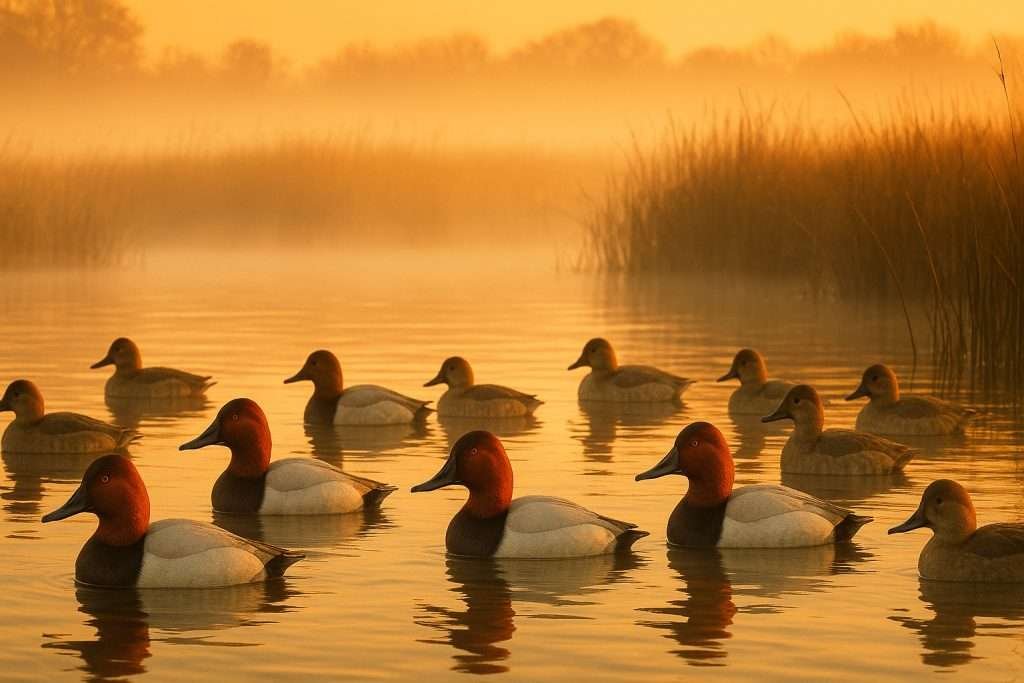
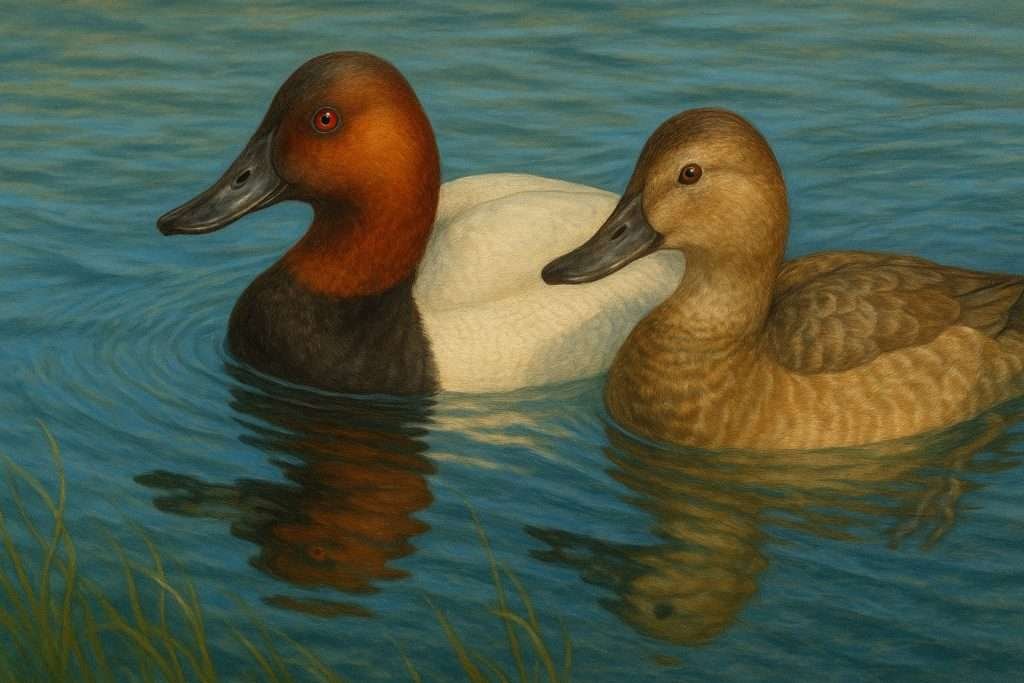
Male Canvasbacks
- Head: Rich chestnut-red
- Eyes: Bright crimson red
- Bill: Black, long, and sloping into the forehead
- Neck: Black
- Back and sides: Pale grayish-white, like canvas
- Chest and underparts: Black
Female Canvasbacks
- More muted coloring than the males
- Head and body: Light brown with pale cheeks
- Eyes: Brown
- Bill: Black, slightly lighter at the base
When flying, Canvasbacks display rapid wingbeats and hold their necks out straight, making them distinguishable from other ducks, such as Redheads, which are often confused with them at a distance.
Habitat and Range
Canvasbacks prefer extensive, shallow freshwater wetlands with abundant submerged aquatic vegetation. Their ideal breeding habitat includes prairie potholes—small, shallow ponds left behind by glaciers—in the northern U.S. and southern Canada.
Breeding Range:
- Southern Canada (especially Alberta, Saskatchewan, and Manitoba)
- Northern Great Plains of the U.S. (Minnesota, the Dakotas, and Montana)
Wintering Range:
- Southern U.S. coasts (Chesapeake Bay, Gulf Coast, San Francisco Bay)
- Inland lakes and marshes
- Occasionally found as far south as Mexico
Feeding Habits and Diet
Canvasbacks are diving ducks and are specially adapted to forage underwater. Their preferred foods are submerged aquatic plants, which they pluck from lake and marsh bottoms.
Favorite Foods Include:
- Wild celery (Vallisneria americana)
- Pondweeds
- Widgeon grass
- Sago pondweed
- Seeds and tubers
They also eat aquatic insects, small crustaceans, and mollusks, particularly during the breeding season when protein is crucial for egg production.
Wild celery is particularly important. The Canvasback’s Latin name—Aythya valisineria—is derived from wild celery’s scientific name (Vallisneria americana), indicating the importance of this plant to their diet.
Breeding and Nesting
Canvasback ducks begin nesting in late spring, once ice has thawed from the northern wetlands.
Nesting Behavior:
- Nests are built over water, often on floating mats of vegetation
- Females lay 7–10 olive-colored eggs
- Only the female incubates the eggs for about 24–28 days
- Chicks are precocial—able to swim and feed themselves soon after hatching
Broods are often observed following the mother in tight formation through marsh channels. The female is fiercely protective, using vocalizations and distraction displays to ward off predators.
7. Role in Human History and Culture
Canvasbacks have played a significant role in American waterfowl hunting history. In the 19th and early 20th centuries, they were considered a gourmet delicacy.
Cultural Highlights:
- Known as the “King of Ducks” by market hunters
- Served in fine restaurants in New York and Washington, D.C.
- Especially prized when their diet included wild celery, which gave their meat a sweet, nutty flavor
- Overharvesting and wetland drainage led to sharp population declines in the early 1900s
Canvasbacks have since become symbols of waterfowl conservation, especially due to successful restoration projects in places like the Chesapeake Bay.
8. Conservation Status
The Canvasback is not currently endangered, but its populations fluctuate with habitat conditions.
Threats Include:
- Loss of prairie pothole wetlands due to agriculture
- Decline of wild celery and aquatic vegetation
- Pollution and water quality degradation
- Climate change and drought
Conservation Efforts:
- Wetland restoration by organizations like Ducks Unlimited
- The North American Waterfowl Management Plan
- Federal protections under the Migratory Bird Treaty Act
- Hunting regulations and bag limits to ensure sustainability
Overall, Canvasback numbers are considered “stable but vulnerable,” and continued habitat protection is key to their future.
9. Fun Facts About Canvasbacks
- Speedsters in the sky – Canvasbacks can reach flight speeds of up to 70 mph, making them one of the fastest waterfowl in North America.
- Elegant divers – Their streamlined heads and powerful legs make them excellent underwater swimmers, capable of diving up to 6 feet deep.
- Voice of the wetlands – Males make a soft “whooing” call during courtship, while females emit a series of low quacks to communicate with ducklings.
- Lookalike confusion – They’re often mistaken for redhead ducks, but their sloped head profile and bright red eyes help distinguish them.
- High-fashion eyes – A Canvasback’s crimson red eye is a standout field mark in spring and summer, but fades slightly in winter.
- Monogamous during the season – Pairs form in winter and migrate together to the breeding ground,s but do not stay together for life.
- Chesapeake champions – Once comprising over half of all wintering ducks in Chesapeake Bay, Canvasbacks helped shape duck hunting and decoy culture in the region.
- No dabbling here – Unlike mallards, Canvasbacks can’t feed on the surface; their anatomy is fine-tuned for diving.
- Long-distance athletes – Their round-trip migration journey can exceed 3,000 miles each year.
- Floating nurseries – Females often build floating nests in thick cattails and bulrushes, protecting eggs from land predators.
10. Conclusion
The Canvasback duck is one of North America’s most regal and fascinating waterfowl. With its bold colors, powerful flight, and storied history, this duck has captivated generations of naturalists, hunters, and conservationists.
While challenges remain—from habitat loss to climate change—the Canvasback’s story is ultimately one of resilience and renewal. Thanks to conservation efforts and growing awareness of wetland ecosystems, these ducks continue to grace our lakes and marshes with their unique beauty.
Whether you’re lucky enough to spot a flock gliding across a quiet bay or simply admiring their sleek profile in a field guide, take a moment to appreciate the legacy and wonder of the Canvasback duck.
Interested in more waterfowl profiles? Check out our recent post on Mallard ducks and stay tuned for upcoming articles on Wood Ducks and Northern Pintails.