Dabbling Ducks
The Marvelous Mallard Duck: Nature’s Most Recognizable Waterfowl
Aug
Few birds are as instantly recognizable and widely loved as the Mallard duck. With their vibrant plumage, iconic quack, and presence across parks, ponds, lakes, and wetlands throughout the world, Mallards are the quintessential duck. But beyond their familiar looks lies a fascinating species with rich behaviors, migration patterns, and ecological significance.
In this blog post, we’ll dive deep into the life of the Mallard—exploring their biology, behaviors, history with humans, and some surprising facts you may not know.
A Splash of Color: What Does a Mallard Look Like?
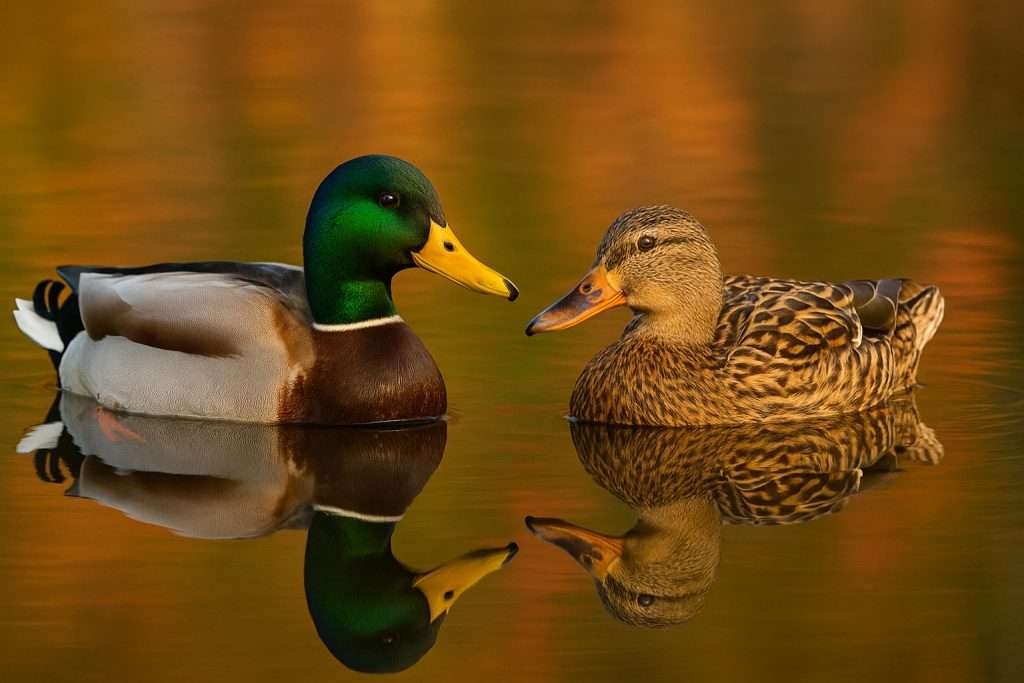
The male Mallard duck (drake) is a sight to behold. With a shimmering green head, bright yellow bill, and chestnut-brown breast, he practically glows in the sunlight. His body feathers are mostly gray, while the tail is black with white borders. Most striking of all is the blue-purple iridescent patch on the wings, called a speculum, bordered with white. Both males and females exhibit this feature, which becomes evident during flight.
The female Mallard duck (hen), in contrast, is mottled brown and tan. Her coloration helps camouflage her while nesting, keeping her and her eggs safe from predators.
Mallards are found throughout the Northern Hemisphere, including North America, Europe, Asia, and parts of North Africa. In the United States, they are among the most common and widely distributed ducks.
Their habitat preferences are highly adaptable:
- Freshwater lakes and ponds
- Rivers and wetlands
- Urban parks and golf courses
- Marshes and coastal estuaries
Thanks to their adaptability, Mallards thrive in both wild and human-altered environments. You’re just as likely to spot a Mallard in a city fountain as you are in a remote wetland.
Quack Facts: Communication and Behavior
Everyone knows the Mallard’s quack—but did you know it’s mostly the females who quack loudly? Males make softer, raspier sounds. Quacks aren’t just noise—they’re a form of communication. Hens may use them to call ducklings, signal danger, or ward off threats.
Mallards are highly social birds, often seen in pairs or flocks. During the fall and winter, they form large groups, sometimes numbering in the hundreds.
They are omnivores, with a diverse diet that includes:
- Aquatic plants
- Insects
- Crustaceans
- Small fish
- Grains and seeds
They feed by dabbling—tipping their bodies forward and reaching underwater with their bills, rather than diving like other ducks.
Migration: Traveling with the Seasons
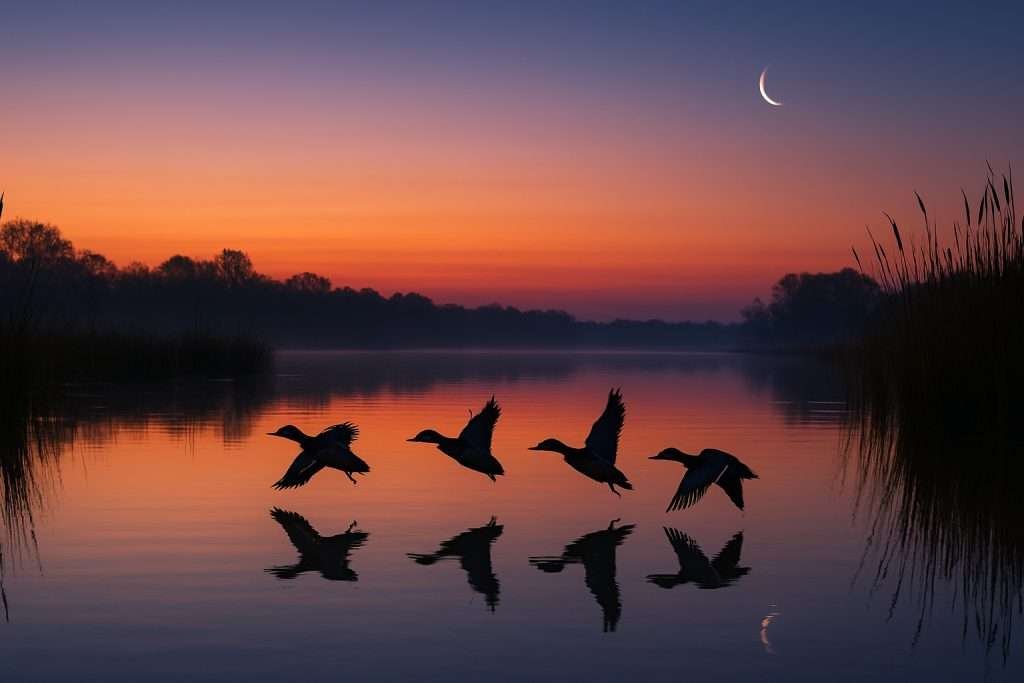
Mallards are migratory in most of their range. In North America, they typically breed in the northern U.S. and Canada during the summer, then fly south to warmer climates in the fall.
Their migration is triggered by shorter daylight hours and colder temperatures. Some Mallards, especially those in urban or southern regions, may remain year-round if food and open water are available.
Fun fact: Mallards can fly at speeds of up to 55 miles per hour, making them swift and efficient long-distance travelers.
Love and Ducklings: Mating and Nesting Habits
Mallards usually form mating pairs in the fall or early winter, months before the actual breeding season. Once spring arrives, the female searches for a nesting site—often close to water but sometimes surprisingly far from it. Urban Mallards have even been known to nest on balconies or in flowerpots.
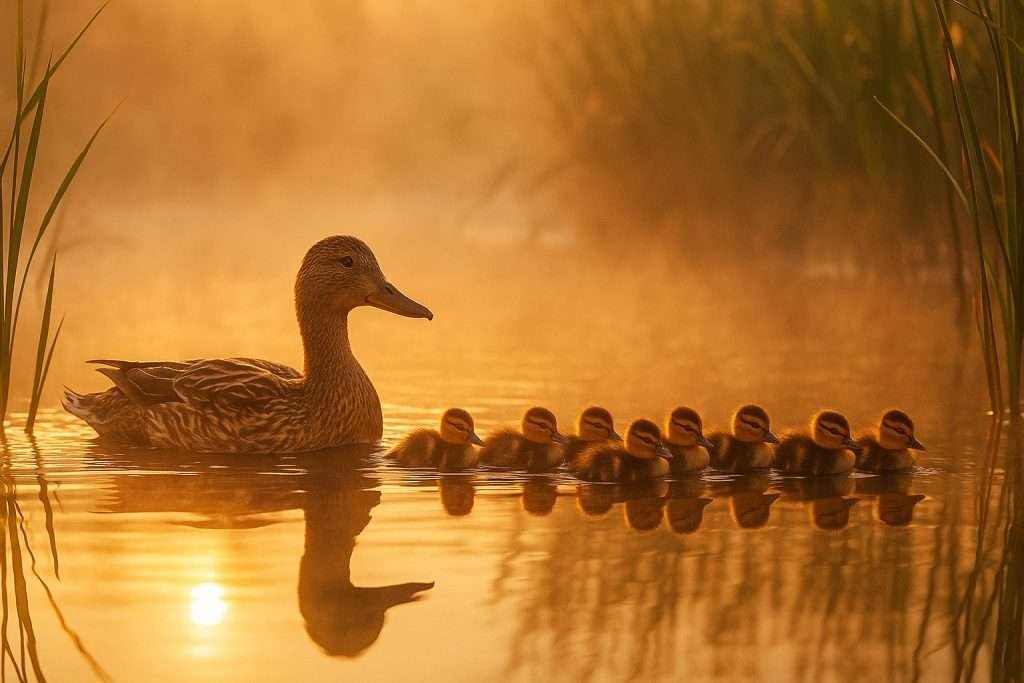
A typical clutch contains 8 to 13 eggs, laid one per day. The female incubates them for about 26 to 30 days, while the male typically leaves after mating.
Once hatched, ducklings are precocial—they can see, walk, and swim within hours. However, they still rely on their mother for protection and guidance.
Mallards and Humans: A Complicated Relationship
Mallards are among the most familiar wild animals in human society. Whether it’s feeding them bread at the local pond (please don’t!) or watching them waddle through parks, they’ve become unofficial wildlife ambassadors.
However, their closeness to humans comes with challenges:
- Feeding ducks human food, especially bread, can lead to malnutrition and pollution.
- Overpopulation in urban areas can stress ecosystems.
- Mallards can hybridize with other species, like American black ducks and domestic ducks, leading to genetic dilution.
Despite these issues, Mallards remain resilient and adaptable, showing an impressive ability to thrive alongside us.
Mallards in Culture and Conservation
Mallards have long appeared in folklore, art, and even politics. The phrase “lame duck” originally referred to injured ducks that lag during migration, later becoming a metaphor for politicians finishing their term in office.
They are also the ancestor of most domestic duck breeds. Over centuries, humans have selectively bred Mallards for size, behavior, and egg production, creating breeds such as the Pekin, Rouen, and Khaki Campbell.
Despite their abundance, Mallards still benefit from conservation efforts aimed at preserving wetland habitats. Organizations like Ducks Unlimited and state wildlife agencies play a crucial role in protecting breeding grounds, migratory corridors, and overwintering habitats.
Surprising Mallard Facts
Here are some fun and lesser-known facts about Mallards:
- Mallards can sleep with one eye open, utilizing unihemispheric slow-wave sleep to remain alert to potential dangers.
- They have 360-degree vision, thanks to the placement of their eyes.
- Male Mallards molt after breeding season and lose their bright colors, becoming more like females for a few weeks—this is called “eclipse plumage.”
- Mallards have been observed exhibiting impressive memory and problem-solving skills, displaying intelligence not typically associated with ducks.
- The oldest known wild Mallard lived to be 27 years old, although most mallards in the wild typically live around 5–10 years.
How to Ethically Enjoy Mallards
If you love watching ducks at your local pond, here are a few tips to keep them safe and healthy:
- Please don’t feed them bread. Try cracked corn, oats, birdseed, or duck pellets instead.
- Keep dogs leashed near waterfowl habitats.
- Avoid disturbing nests or ducklings, even if they seem abandoned.
- Support wetlands conservation groups and habitat restoration projects.
- Dispose of fishing line and trash properly to prevent injuries to ducks and other wildlife.
Why Mallards Matter
Mallards are more than just common ducks. They are a vital part of many ecosystems—spreading seeds, controlling insect populations, and serving as prey for other wildlife. They also serve as environmental indicators, with their presence or absence revealing much about the health of an area.
But perhaps most of all, Mallards remind us of the quiet wonders in nature we often overlook. Their gentle quacks, graceful swimming, and charming duckling parades offer a simple joy—one that connects us to the wild, even in the heart of a city.
Conclusion
The Mallard is a bird that thrives in both the wild and in our everyday lives. Its beauty, adaptability, and curious personality make it a beloved fixture around the world. Whether you’re an avid birder or someone who enjoys the occasional trip to the park, taking time to observe and appreciate the humble Mallard is always worthwhile.
Let us respect and protect the habitats they rely on—because when we care for the Mallard, we care for the broader ecosystems that support life for all.