
Dabbling Ducks
Meet the Mallard Duck North America’s Most Familiar Duck
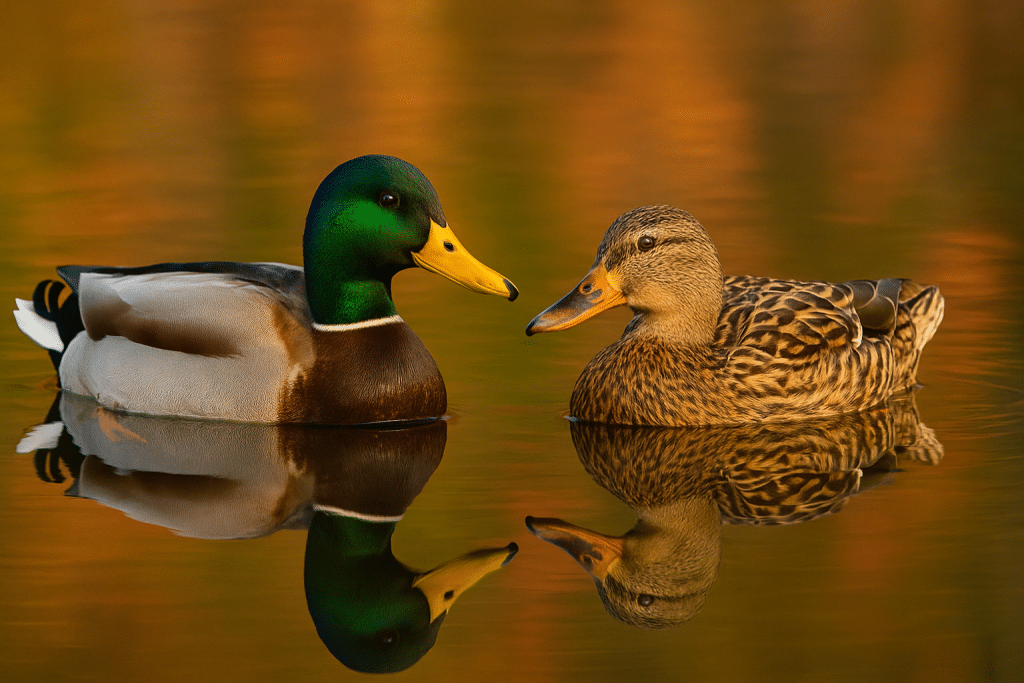
Apr
You’ve seen this duck a thousand times. At the park, on a pond, a waddling mother duck with a line of fuzzy ducklings behind it. The mallard is so common that most of us barely give it a second glance. It’s just… a duck. The duck, really. The one kid draws in crayon with a green head and orange feet.
But there’s a lot going on with mallards that most people never notice. The males completely change their appearance every summer. Females pick their mates based on dance moves. And nearly every domestic duck breed on the planet traces back to this one wild species. For a bird we tend to walk right past, the mallard has a surprisingly full résumé.
This guide covers everything you need to know about North America’s most familiar duck. You’ll learn how to tell males from females in every season, where mallards live and why they seem to thrive everywhere, what they actually eat, how they raise their young, and why you should stop feeding them bread.
How to Identify a Mallard Duck: Key Physical Characteristics
Spotting your first mallard is exciting. The male’s brilliant colors make him hard to miss.
Male Mallard Duck Colors and Features
The male mallard duck stands out like a jewel on any pond or lake.
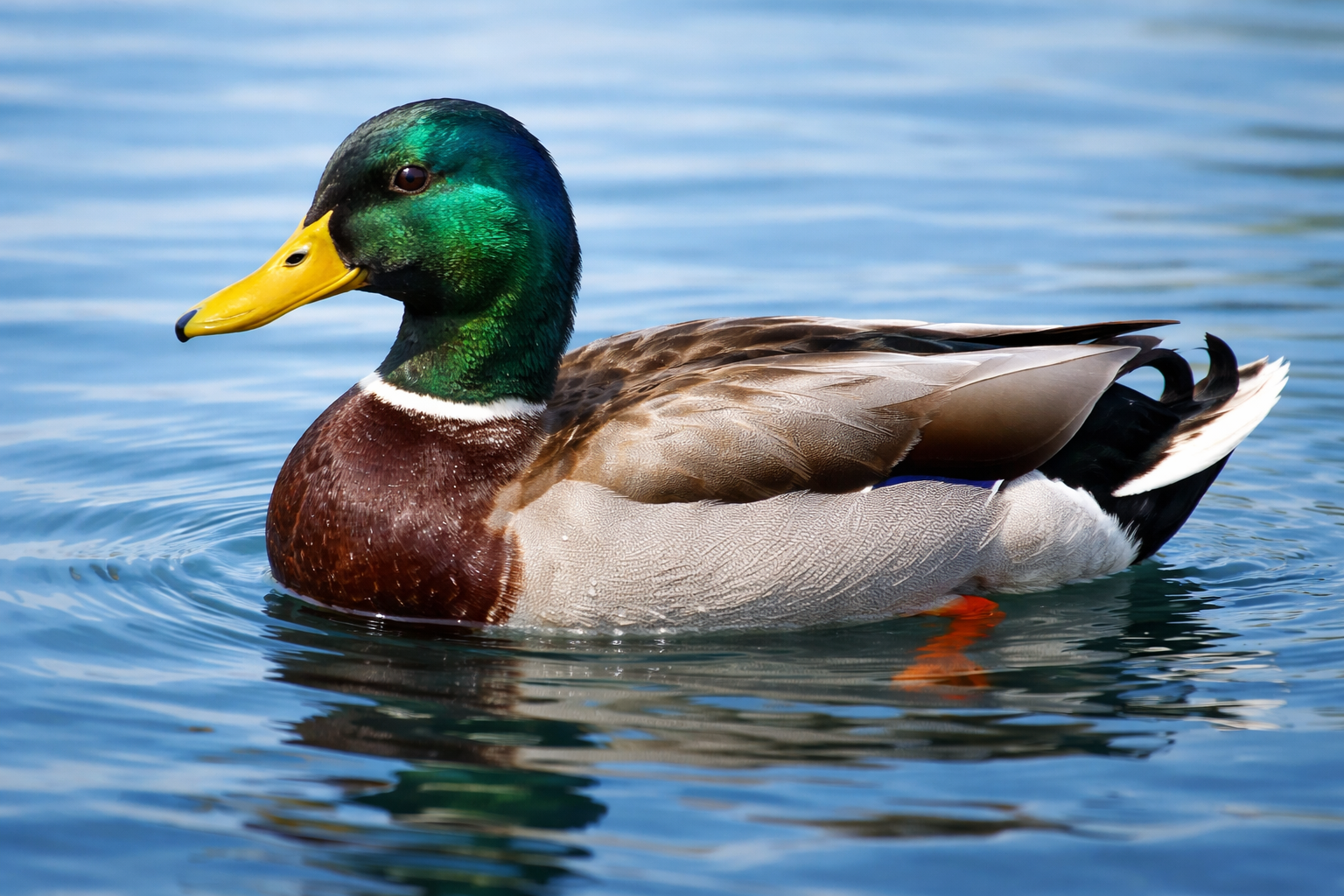 His most striking feature is his iridescent green head, which shimmers in the sunlight, changing from emerald to almost black depending on the angle. Right where his head meets his body, you’ll notice a crisp white ring that looks like he’s wearing a tiny collar.
Below that white ring sits a rich chestnut-brown breast. The contrast between these three colors creates one of nature’s most recognizable patterns. His bill is bright yellow-orange, so vivid it almost looks artificial. The rest of his body appears mostly gray when he’s swimming, but look closer, and you’ll see fine vermiculations, those delicate wavy lines that give his feathers texture.
The black rear end provides another splash of contrast. Even more distinctive are those curled black tail feathers, sometimes called drake feathers, that curl up like a little question mark. When he’s paddling around or waddling on shore, check out his orange legs and feet.
Female Mallard Duck Colors and Identification
Female mallard ducks look completely different from their flashy partners. She wears mottled brown plumage covered in dark brown streaks and spots. This camouflage coloring isn’t about being boring. It keeps her hidden when she’s sitting on her nest.
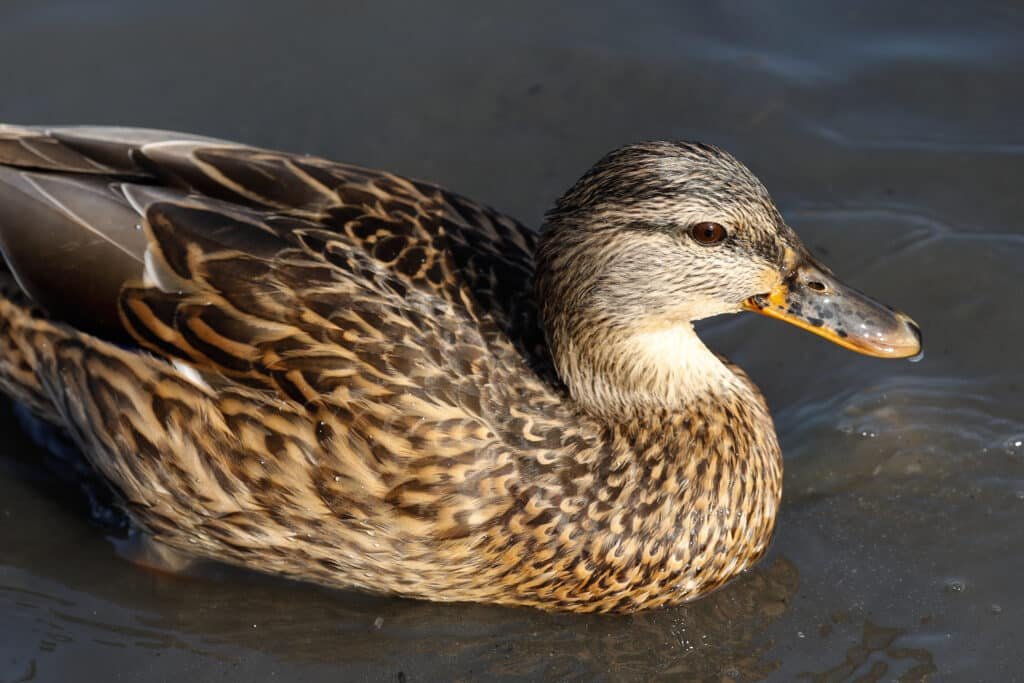
Her bill is orange like the male’s, but it has dark markings running along the center ridge, creating a distinctive pattern. The real identification secret is her speculum, that blue-purple wing patch bordered by white stripes. You’ll see it flash when she stretches her wings or takes flight. She’s roughly the same size as males, but her subdued coloring often makes people overlook her entirely.
Size and Body Shape Compared to Other Ducks
Mallards rank as medium to large ducks. They measure between 20 and 26 inches from bill to tail, with a wingspan stretching 32 to 37 inches. Next to smaller species like teal, mallards look substantial.
Their rounded head shape and relatively long body give them a different profile than diving ducks, which tend to be more compact. Weight varies from 1.6 to 3.5 pounds. Males typically outweigh females by a few ounces.
Seasonal Plumage Changes in Mallards
Male mallards don’t keep their fancy feathers year-round.
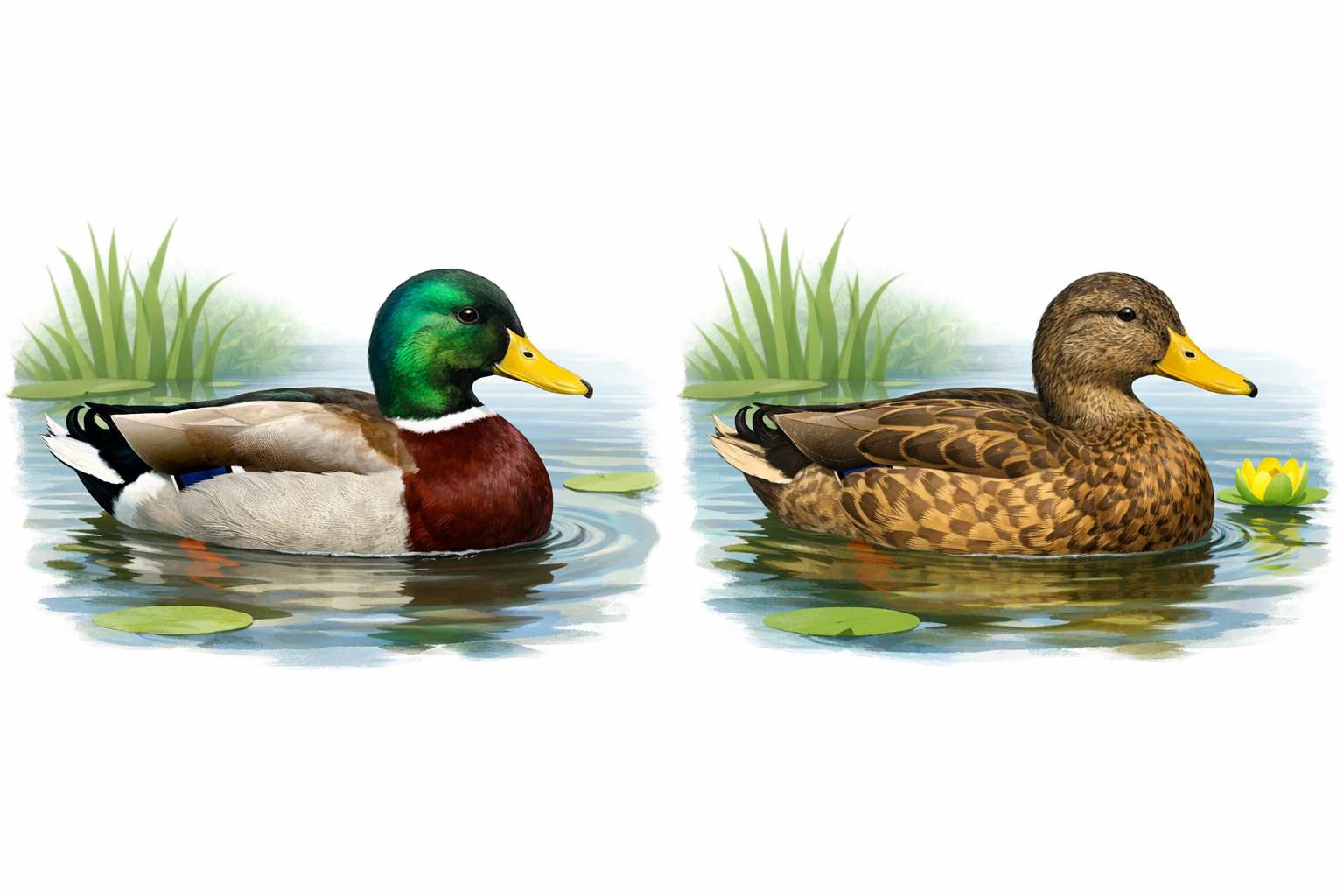 During summer, they molt into what’s called eclipse plumage. They look remarkably similar to females during this period, though they keep that bright yellow bill as a giveaway. By early fall, their breeding plumage grows back in time for the courtship season.
Females keep consistent plumage throughout the year. They show slight feather wear by late summer, but nothing as dramatic as the male’s transformation. This seasonal change surprises many people who spot a “strange brown duck” in July, not realizing it’s just a male mallard in his summer disguise.
Where Mallard Ducks Live: Habitat and Range
Natural Habitats Across North America
Mallard ducks are true generalists. You’ll find these adaptable birds throughout the United States, Canada, and Mexico in almost any aquatic environment you can imagine. They’re not picky about where they set up shop.
Shallow freshwater wetlands are their favorite haunts. Marshes, ponds, lakes, and slow-moving rivers all provide the perfect mallard real estate. What really matters to them is having access to water bodies with emergent vegetation, those plants that grow partially above the waterline.
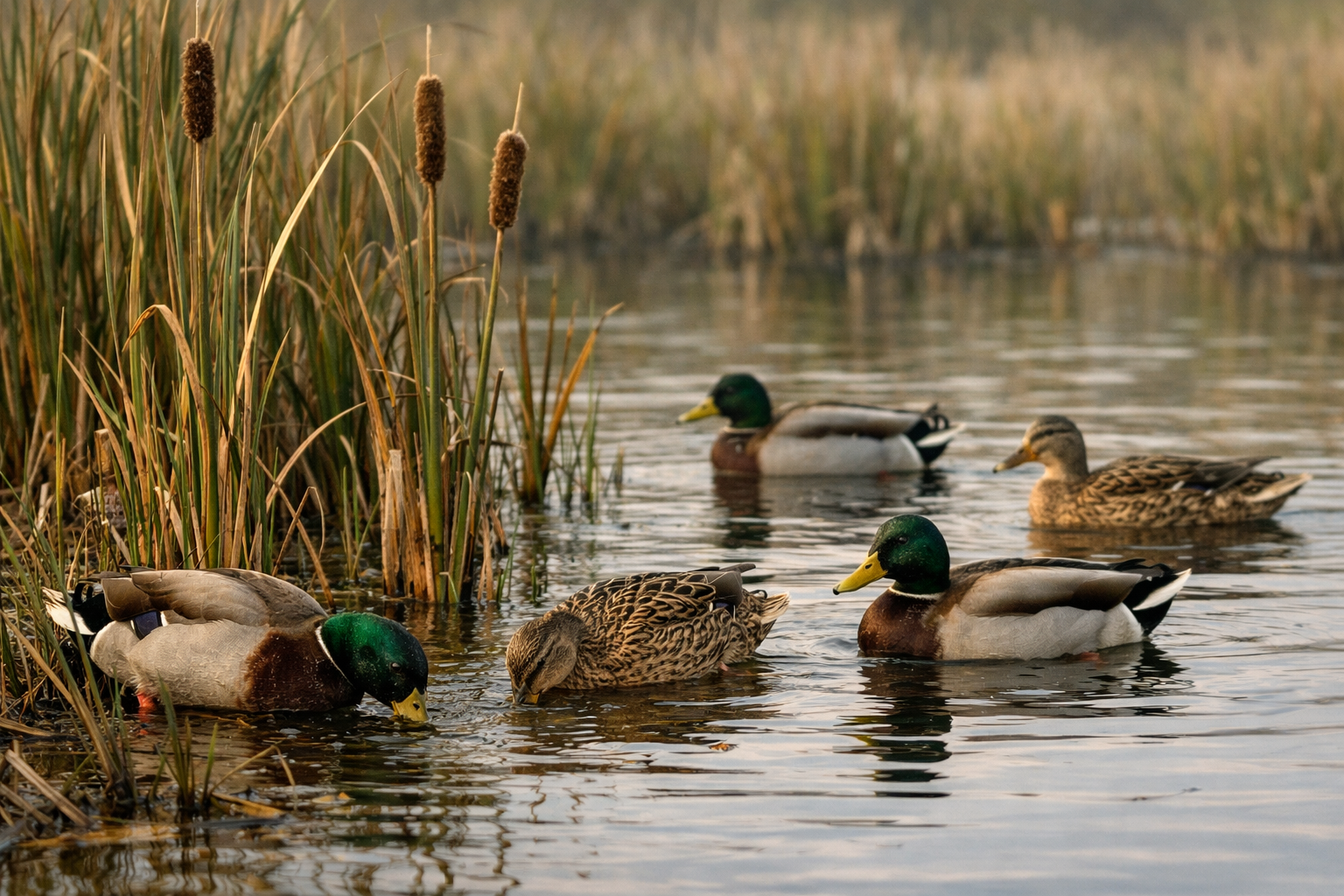 This vegetation provides both food and protective cover where mallards can nest and hide from predators.
The mallard’s range is truly impressive. In temperate zones with mild winters, many mallards stay put year-round. They’ve found spots where the water doesn’t freeze completely and food remains accessible. Northern populations face harsher conditions though. These birds migrate south when winter arrives, following ancient pathways their ancestors traveled for thousands of years.
Urban and Suburban Mallard Populations
Walk through any city park with a pond, and you’ll probably spot mallards paddling around. These ducks have become exceptionally comfortable living alongside humans. Golf courses, retention ponds, and decorative water features all attract mallard populations that thrive in developed areas.
Urban mallards often become permanent residents. They don’t migrate like their wild counterparts. Why would they? Reliable food sources and artificially maintained open water throughout winter remove the need for long, dangerous journeys south. Many people feed these ducks regularly, despite wildlife experts consistently warning against offering bread, which lacks nutritional value.
Their nesting choices in urban settings can surprise you. Female mallard ducks have been found nesting in landscaped flower beds, large planters, and even on building rooftops near water. They’re incredibly resourceful when selecting nest sites, sometimes choosing spots that seem wildly impractical to human observers.
Migration Patterns and Seasonal Movement
Northern breeding populations of mallard ducks follow four major North American flyways during migration: the Atlantic, Mississippi, Central, and Pacific routes.
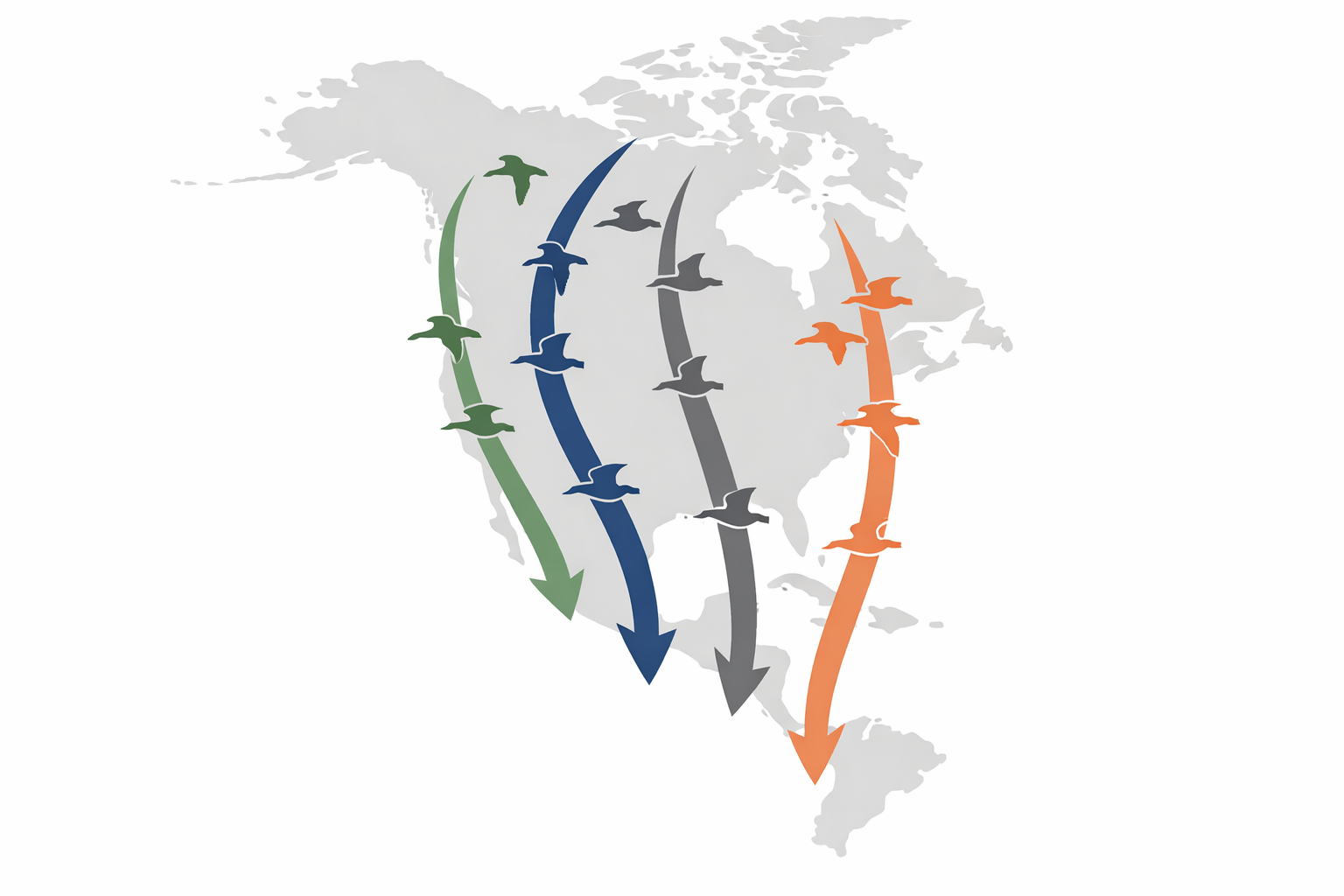 These aerial highways guide millions of waterfowl between breeding and wintering grounds twice each year.
Timing varies based on weather patterns and food availability. Most male mallard ducks and females head south between September and November as temperatures drop and water begins freezing over. The return journey takes place from March through April, as spring awakens the northern wetlands.
The distances these ducks cover can be staggering. Many individuals travel over 800 miles during migration. Some birds breeding in Canada and the northern United States fly all the way to the Gulf Coast and Mexico, where mild winters and abundant food await them.
What Do Mallard Ducks Eat: Diet and Feeding Behavior
Natural Diet in Wild Habitats
Mallard ducks aren’t picky eaters. These adaptable birds have an omnivorous diet that changes with the seasons and whatever food sources they can find in their environment. Their menu includes aquatic plants, seeds, grasses, and various grains they discover while foraging along shorelines and in shallow waters.
Plant matter makes up the bulk of what mallard ducks eat during most of the year. They nibble on pondweeds, wild rice, sedges, and algae growing in and around the water. But these ducks need protein too, especially during breeding season when females are producing eggs and adults are molting their feathers. That’s when they actively hunt for aquatic insects, snails, small fish, tadpoles, and crustaceans to meet their nutritional needs.
You’ll recognize a feeding mallard by its signature dabbling behavior.
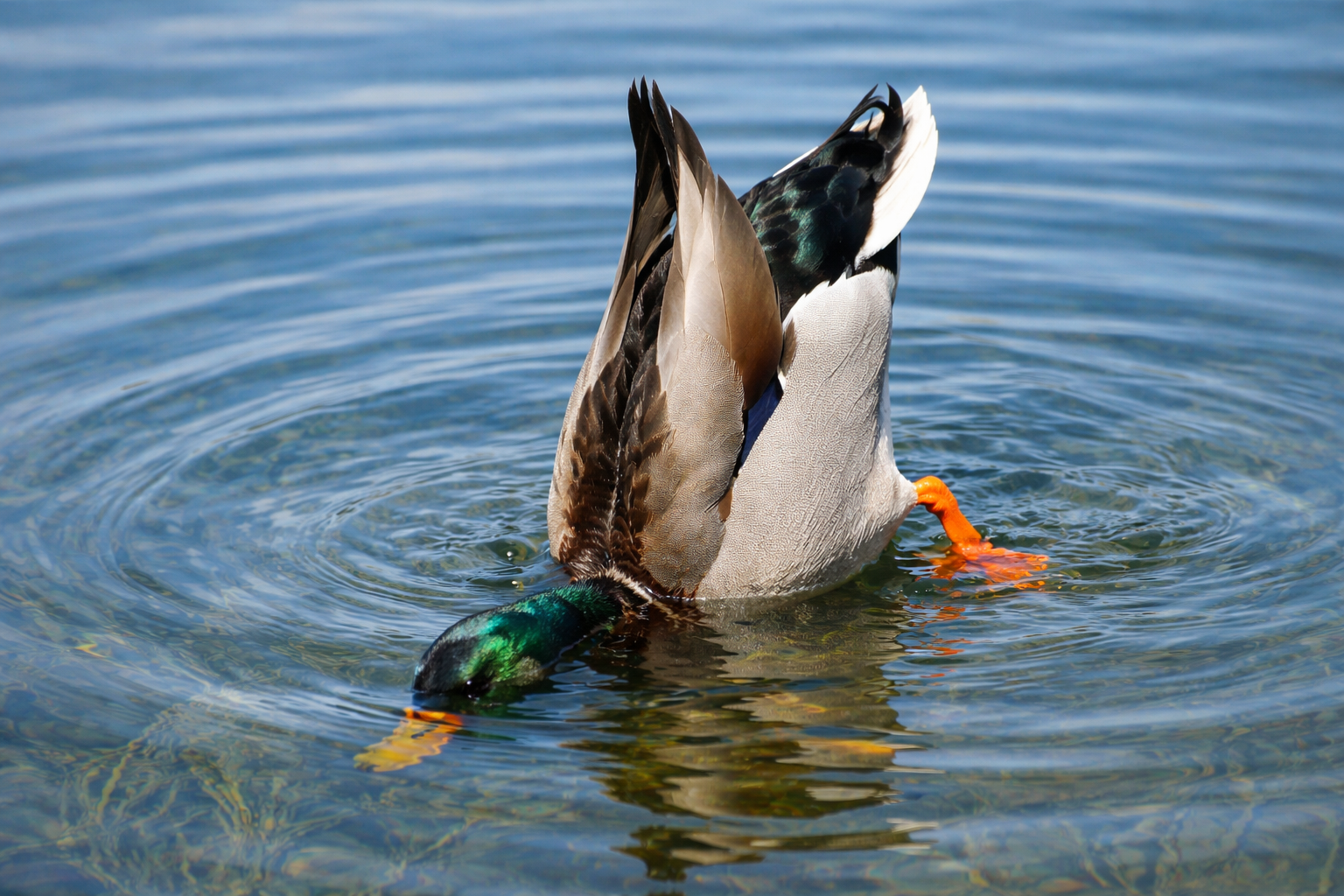 The duck tips forward in the water, dunking its head and neck below the surface while its tail points straight up. This iconic pose lets them reach vegetation and small creatures just below the water’s surface without fully submerging.
Come fall and winter, mallard ducks become opportunistic field foragers. They fly to agricultural areas where they feast on waste corn, wheat, rice, and soybeans left behind after harvest. This high-energy food helps them build fat reserves for migration and surviving cold winter months.
Feeding Techniques and Daily Patterns
Watch mallard ducks at your local pond, and you’ll notice they follow a predictable routine. Most feeding activity occurs at dawn and dusk. They rest during the middle of the day, often preening their feathers or napping on the shore.
Their bills are perfectly designed for their feeding style. Mallards filter-feed by straining water through lamellae, which are comb-like structures lining the edges of their bills. Water flows out while food particles get trapped inside. Pretty clever.
When they upend to reach food below the surface, mallard ducks can access vegetation and invertebrates as deep as 16 inches. That’s their maximum depth limit. They rarely dive completely underwater like diving duck species such as canvasbacks or redheads. Their body structure and leg placement just aren’t built for full submersion hunting.
Why You Shouldn’t Feed Bread to Mallards
Many people love feeding mallard ducks at the park, and bread seems like the obvious choice. Don’t do it.
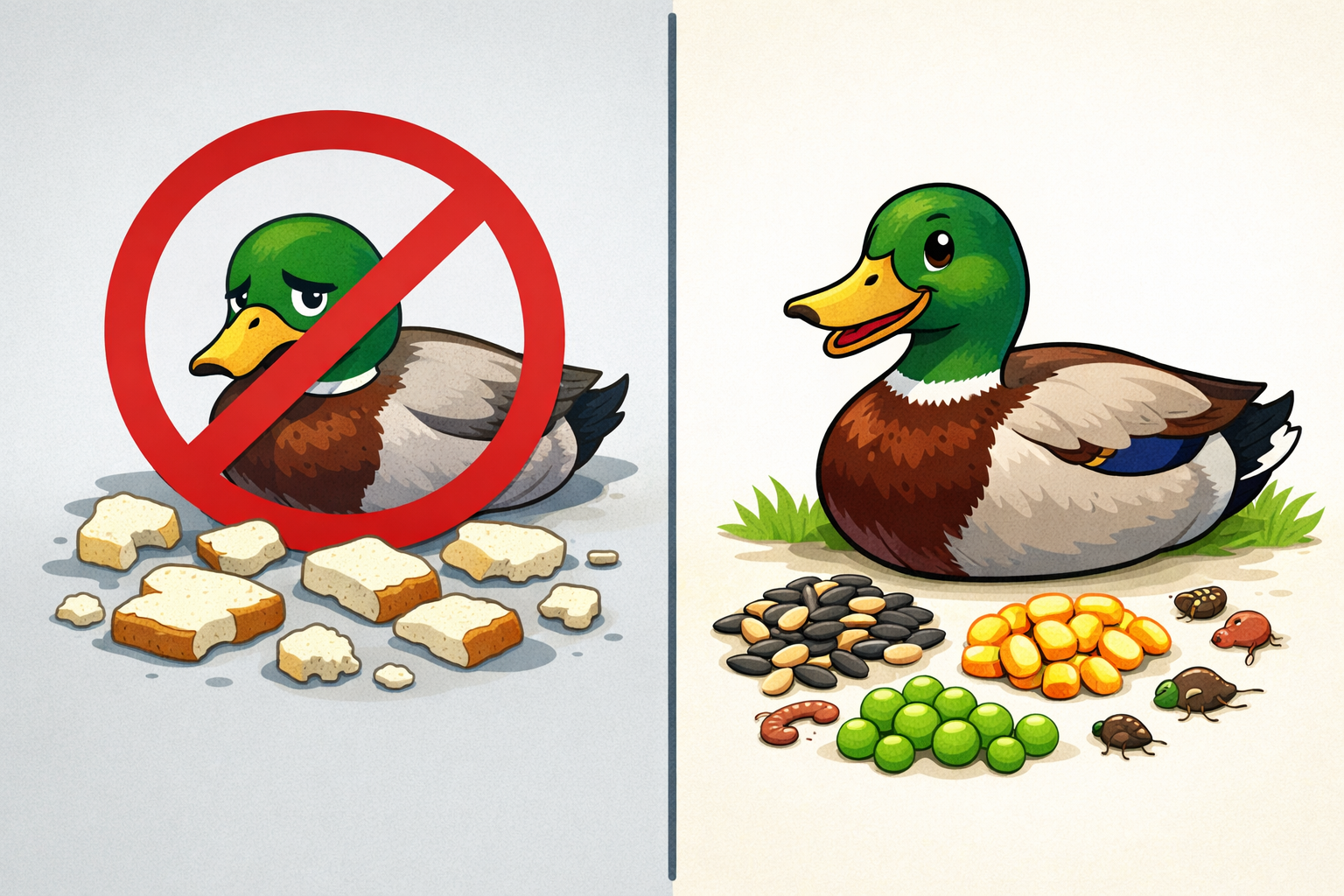 Bread provides empty calories that lack the essential nutrients mallards need to stay healthy. Regular bread consumption leads to malnutrition, weakened immune systems, and a condition called “angel wing,” where feathers grow abnormally.
Overcrowding creates another serious problem. When ducks gather at popular feeding sites, disease spreads rapidly through the concentrated population. Aggressive behavior increases, too, as birds compete for handouts.
The environmental impact extends beyond the ducks themselves. Uneaten bread sinks and degrades water quality, promoting harmful algae blooms that damage entire ecosystems. Rotting food attracts rats and other unwanted pests to waterways.
If you really want to offer food to mallard ducks, choose better alternatives. Cracked corn, oats, frozen peas (thawed), or birdseed provide actual nutrition in moderation. Even better? Let them find their own natural food sources. They’re excellent foragers who don’t need our help to thrive.
Mallard Duck Mating Habits and Reproduction
Courtship and Pair Bonding Behavior
Mallard courtship is surprisingly complex and starts much earlier than you’d think. While most people assume ducks pair up in spring, male mallards actually begin their elaborate displays in fall, months before breeding season arrives. You’ll see groups of males competing for female attention with head-bobbing displays that look almost choreographed.
The males put on quite a show. They perform what scientists call “grunt-whistle” calls, a sound that’s softer than the female’s loud quack but definitely distinctive once you know what to listen for. Males will swim in tight circles around females, raising themselves up in the water and shaking their heads vigorously.
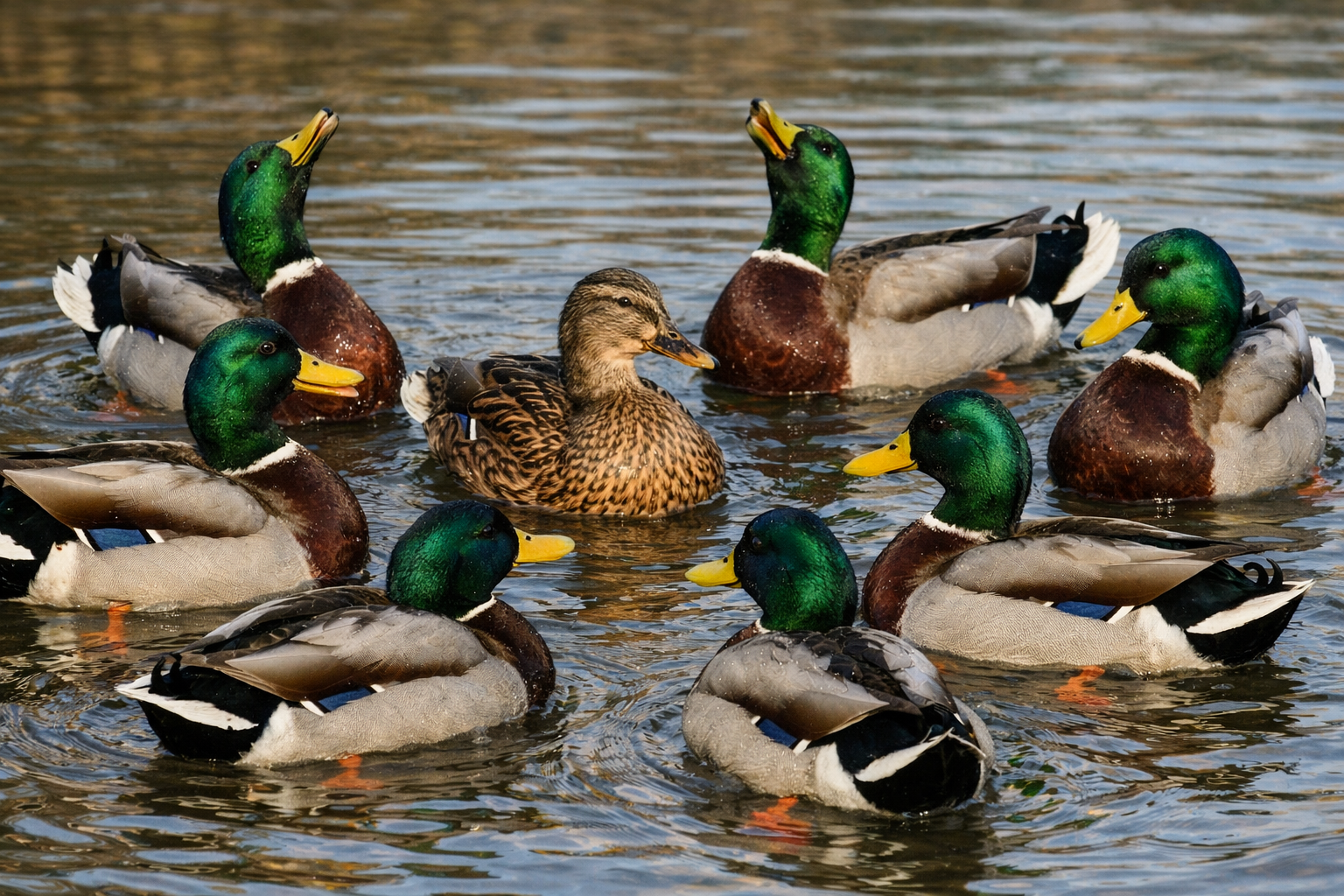 Sometimes several males synchronize their movements, creating an impressive water ballet that females watch carefully before making their choice.
Pair bonds typically form during the winter months. But here’s something interesting: these relationships only last through the breeding season. By the time the female begins incubating eggs, the male mallard duck abandons his mate entirely and joins other males to molt. Females choose their partners based on plumage brightness and display energy, which signals good health and strong genes for their future ducklings.
Nesting Sites and Egg Laying
Female mallard ducks take full responsibility for nest building and do so without any help from males. They construct shallow ground nests lined generously with their own soft down feathers, creating a warm cushion for the eggs. Location matters tremendously for survival. Most females choose spots in tall grass, dense reeds, or tucked under shrubs near water sources.
The concealment strategy is critical. Predators are everywhere. A well-hidden nest means the difference between successful hatching and total loss.
Egg laying begins in early spring, typically March through May, depending on latitude and weather. The female mallard duck produces 9 to 13 eggs, usually cream-colored or slightly greenish. She lays one egg per day until the clutch is complete. Only after the last egg arrives does incubation truly begin, which ensures all ducklings hatch around the same time.
The incubation period lasts 26 to 28 days. During this time, the female rarely leaves the nest except for brief feeding breaks. She carefully covers the eggs with down when she does leave, maintaining the temperature and hiding them from view.
Duckling Development and Maternal Care
Baby mallards are precocial, meaning they’re ready to move almost immediately after hatching. Within 24 hours of breaking through their shells, these fluffy ducklings leave the nest permanently.
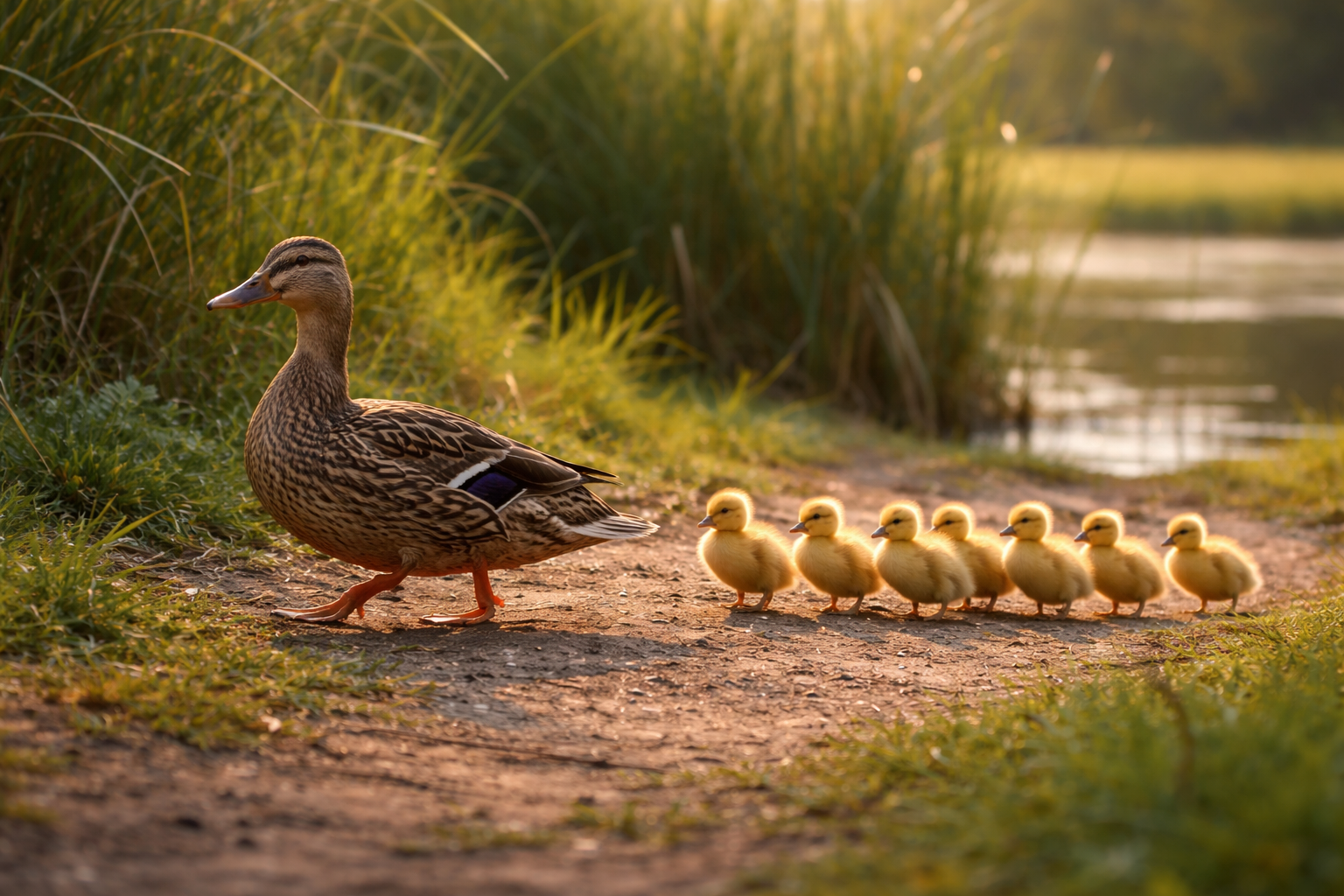 The mother leads her entire brood to water, sometimes quite a distance from the nesting site.
The journey to water can be perilous, especially for urban ducks nesting in planters or on rooftops. You’ve probably seen videos of concerned humans helping ducklings safely cross busy streets.
Once at the water, ducklings can swim and find food independently. They’re remarkably self-sufficient. But they still need mom desperately for warmth and protection. The female broods her young regularly, tucking them under her wings when they’re cold or threatened. This maternal care continues for 50 to 60 days until the ducklings can fly.
The survival odds aren’t great. Only 50 to 60% of ducklings make it to fledging age. Predators like snapping turtles, large fish, raccoons, and birds of prey take a heavy toll on young mallards.
Lifespan and Population Success
Wild mallards typically live 5 to 10 years when they survive past the vulnerable duckling stage. The maximum recorded age is an impressive 27 years, though that’s exceptionally rare. Most face predation, disease, or harsh weather long before reaching old age.
Despite these challenges, mallard ducks remain the most abundant waterfowl species in the Northern Hemisphere. The North American population hovers around 11 to 12 million birds during the breeding season. Their adaptability to human-altered landscapes and diverse habitats has allowed them to thrive where other species struggle. This reproductive success and population stability make mallards a conservation success story.
Mallard Duck Behavior and Interesting Facts
Social Structure and Communication
Mallards are surprisingly social creatures outside of nesting season. You’ll often spot them in loose flocks ranging from just a few dozen birds to massive gatherings of thousands, especially during migration periods or at popular feeding spots.
The classic duck “quack” you’re thinking of? That’s the female mallard. She produces that familiar loud, resonant quacking sound that echoes across ponds and lakes. Male mallards sound completely different.
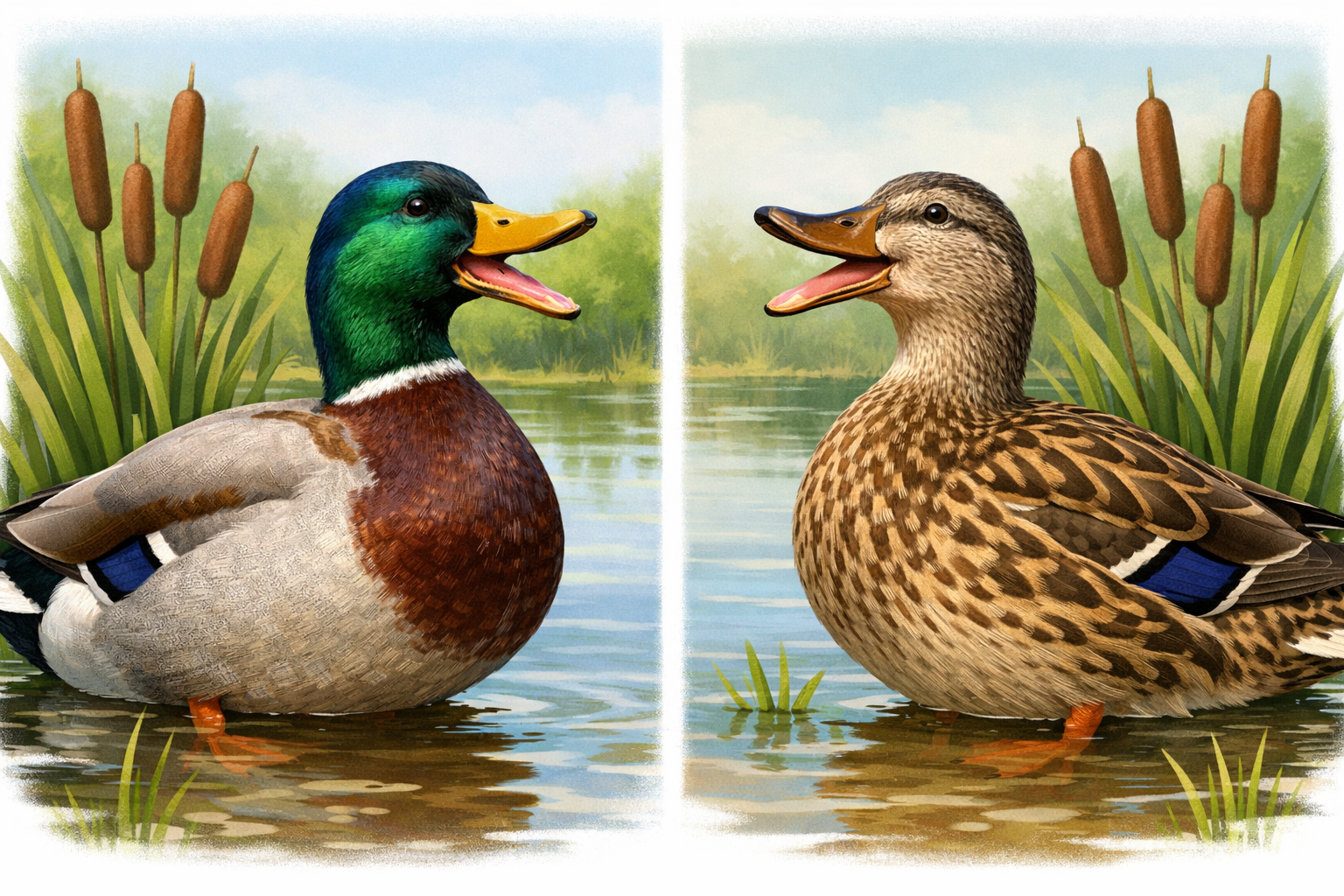 They make softer, raspy calls that almost sound like they’re wheezing or whispering compared to their vocal female companions.
Like many social animals, mallards establish dominance hierarchies within their groups. You might see males engaging in head-bobbing displays or even physical confrontations to determine who’s boss. These interactions become especially intense during breeding season when competition for mates heats up.
When they’re not actively feeding or courting, mallards love to loaf together. They’ll gather on shorelines, floating platforms, or just bob around on the water in groups. This behavior provides safety in numbers, since more eyes mean better predator detection.
Swimming and Flight Capabilities
Ever wonder how mallards stay dry while spending all day in water? They maintain waterproof feathers by spreading oil from a special preen gland located at the base of their tail. You’ll often see them twisting their heads back to reach this gland and meticulously coating their feathers.
These ducks are powerful fliers. During migration, they can reach speeds between 40 and 60 mph in direct flight. What’s really impressive is how they spring directly from water into the air without needing a running start across the surface, as some other waterfowl species require.
Their webbed feet work like built-in paddles for swimming. The legs are positioned far back on their bodies, which makes them excellent swimmers but gives them that characteristic waddling walk on land.
Predators and Survival Strategies
Life isn’t easy for mallards. Adults face threats from foxes, coyotes, raccoons, large hawks, and eagles. The dangers multiply for eggs and ducklings, which fall prey to snakes, skunks, minks, crows, and gulls. Sometimes, over half of all ducklings don’t survive to fledging age.
The female’s mottled brown coloring serves a critical purpose beyond just looks. This camouflage pattern helps her blend into nesting vegetation, protecting both her and the eggs from visual predators.
When danger approaches, mallards rely on alarm calls and their impressive ability to launch into immediate flight. This quick response can mean the difference between life and death.
Mallards as the Ancestor of Domestic Ducks
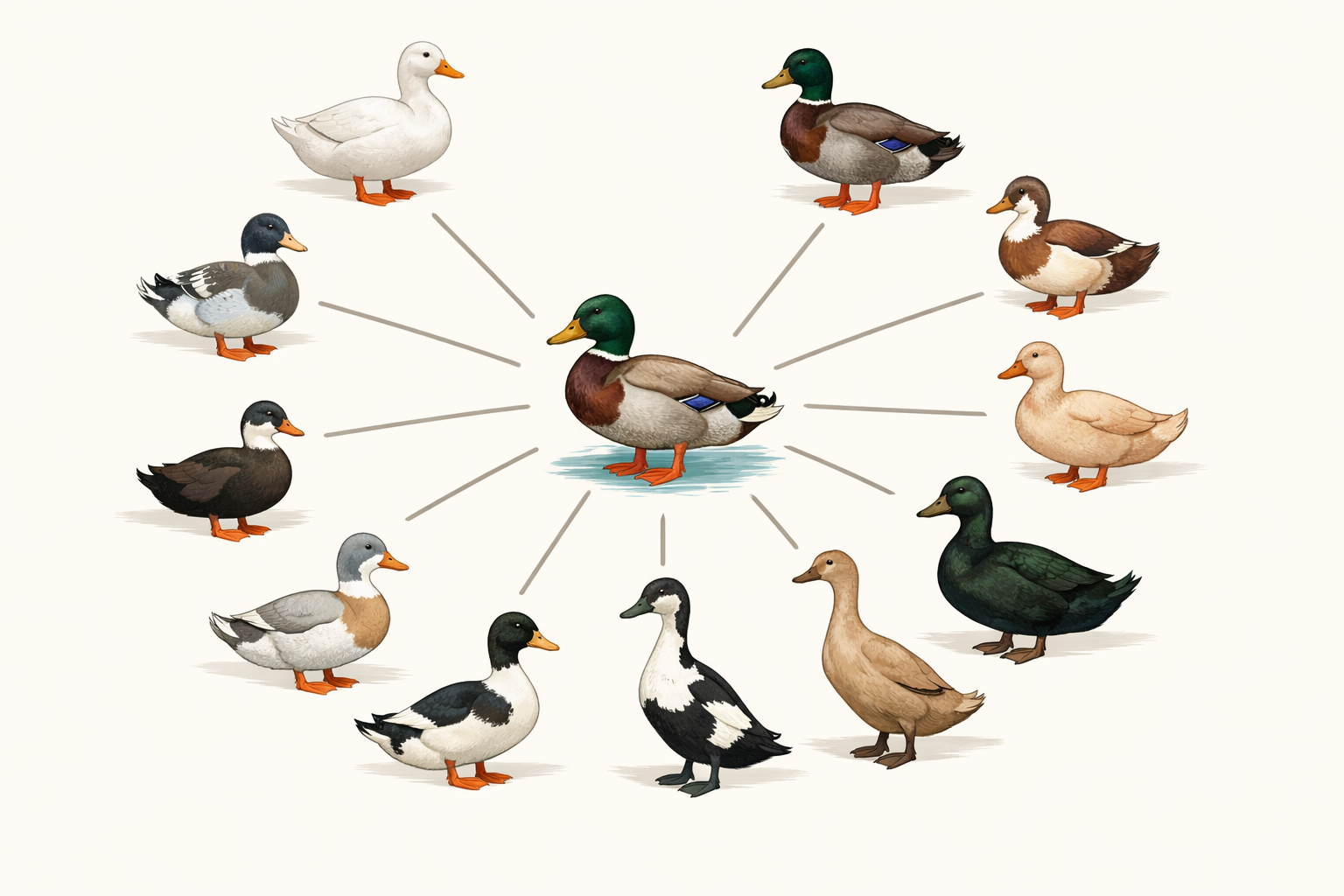
Here’s something fascinating: nearly all domestic duck breeds you’ve ever seen descended from wild mallards through selective breeding. Humans began domesticating these adaptable birds over 2,000 years ago in Asia and Europe.
Wild and domestic mallards can still interbreed and produce fertile hybrid offspring. This genetic compatibility means you might occasionally spot ducks in parks showing unusual color patterns or features from domestic ancestry.
Popular domestic varieties all trace back to mallard roots. Pekin ducks (those all-white ones), Rouen ducks (which look like oversized mallards), Khaki Campbells, and even the upright Runner ducks all share the mallard as their wild ancestor.