
Dabbling Ducks, Perching Ducks
The Wood Duck: Nature’s Work of Art

Aug

Introduction: The Dazzling Jewel of North American Wetlands
In the lush wetlands, wooded swamps, and tranquil forest ponds of North America, one duck reigns as a paragon of avian beauty: the Wood Duck (Aix sponsa). With its kaleidoscopic plumage, mysterious nesting habits, and unique adaptations, the Wood Duck captivates birdwatchers, biologists, and casual nature-lovers alike. Its name reflects its affinity for forested wetlands, but its story is one of survival, ecological importance, and breathtaking elegance.
This blog post dives deep into the life and lore of the Wood Duck — from its iridescent feathers to its dramatic dives from lofty nests — and offers a comprehensive look at what makes this duck one of the most cherished and fascinating species in North America.
Physical Description: Beauty Beyond Compare
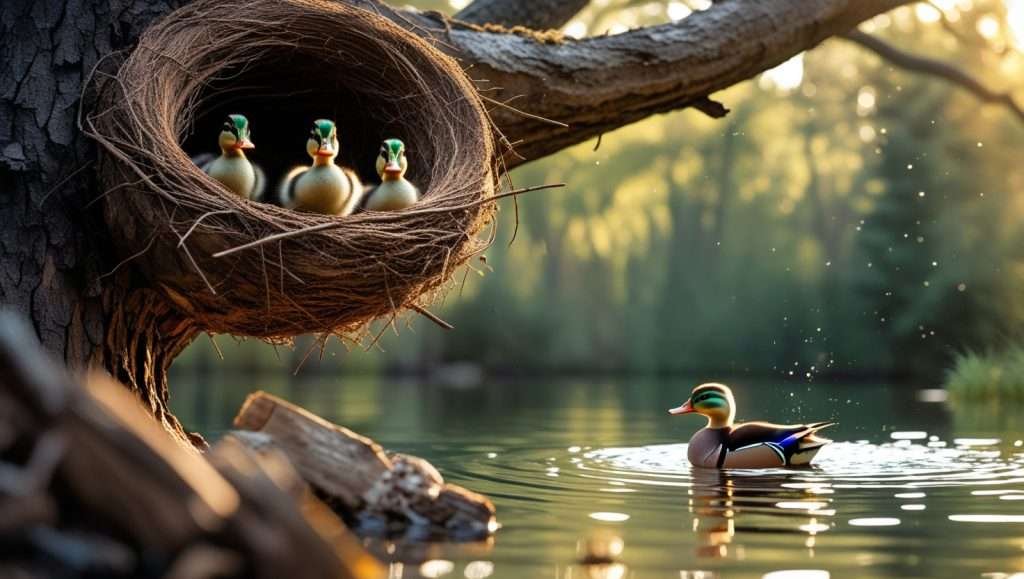
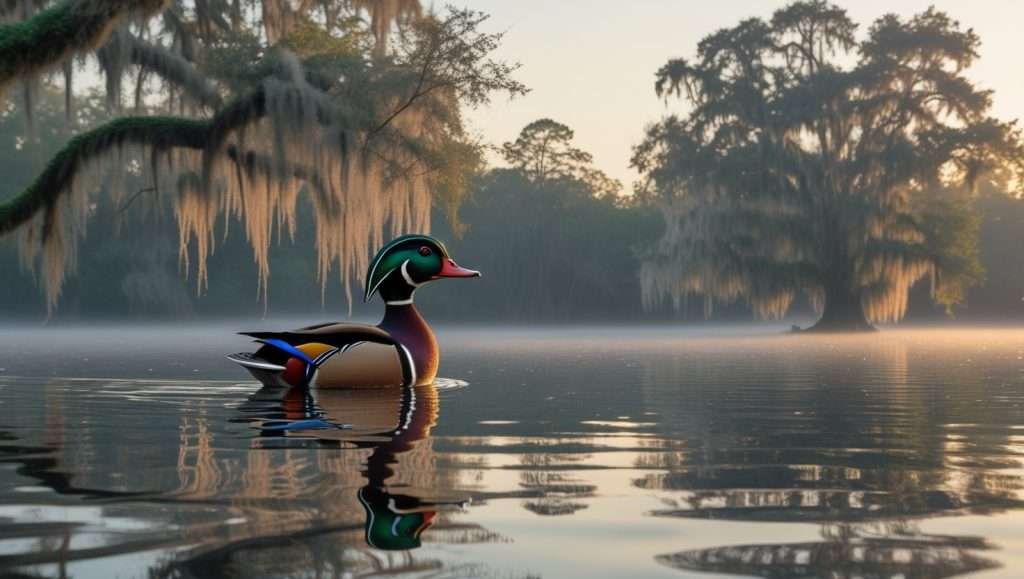
Few birds can rival the Wood Duck’s dramatic coloring, especially the male during breeding season. His iridescent green and bronze head is framed by white stripes that flow like brushstrokes across his face and neck. A crimson eye and a vibrant red and yellow bill add to the striking display. His chest is a rich burgundy, and the sides shimmer with metallic blues and purples, blending into a black-and-white tail.
The female, while more subdued, boasts her elegance. She has a soft, mottled brown body with a white, teardrop-shaped patch around each eye and a slight crest on her head. Her plumage provides perfect camouflage when nesting in tree cavities.
Wood Ducks are medium-sized — about 19 inches long with a wingspan nearing 30 inches — and are built for both gliding over water and agile maneuvering through dense woods.
Habitat and Range: Lovers of the Forest Waters
Unlike most dabbling ducks, Wood Ducks prefer wooded swamps, beaver ponds, freshwater marshes, and riparian zones where trees meet water. Their range stretches across most of the eastern United States and the Pacific Coast, with populations also found in southern Canada and as far south as Mexico and Central America during winter migration.
Their name is not merely poetic — these ducks depend on trees. They nest in natural tree cavities or artificial nest boxes placed 6 to 30 feet above ground or water. Unlike most waterfowl, they are perching ducks, equipped with sharp claws that allow them to grip bark and branches with surprising agility.
Life Cycle and Nesting: A Leap of Faith
One of the most fascinating aspects of Wood Duck life is their nesting behavior. In early spring, the female searches for a suitable cavity in a tree — often one made by a woodpecker or resulting from decay — to lay her eggs. If cavities are scarce, conservationists and landowners often step in with nest boxes, which Wood Ducks readily accept.
After laying a clutch of 6 to 16 creamy white or buff-colored eggs, the female incubates them for about 28–32 days. The male usually leaves early in the incubation period to molt and prepare for migration.
The true spectacle comes after hatching. Within 24 hours, the ducklings — still covered in soft down and completely flightless — must leave the nest. One by one, they launch themselves from heights of up to 50 feet, bouncing on the forest floor or into water below. It’s a heart-stopping, gravity-defying moment that usually ends safely due to their light bodies and fluffy down cushioning the fall.
Once on the ground, the mother leads them to water. From that point on, the ducklings feed themselves, learning to forage on insects, small aquatic creatures, and plants. They grow quickly, able to fly in about two months.
Diet and Feeding Behavior
Wood Ducks are omnivores with a seasonal diet. In spring and summer, they consume aquatic insects, snails, crustaceans, and invertebrates — a protein-rich menu ideal for ducklings and breeding adults. As the seasons shift, so does their palate: they switch to seeds, berries, and acorns. Yes, acorns! Wood Ducks are one of the few ducks capable of digesting these tough, tannin-rich nuts.
They feed by dabbling on the water’s surface, dipping their heads underwater, or foraging along shorelines. Their varied diet helps them thrive in a range of environments and contributes to the control of insect populations and the dispersal of plant seeds.
Conservation Success Story
By the late 1800s and early 1900s, Wood Ducks were nearly wiped out due to unregulated hunting and widespread deforestation. Their bright plumage made them a target for the fashion industry, while the draining of wetlands destroyed critical habitat.
Thanks to the Migratory Bird Treaty Act of 1918 and subsequent conservation efforts, Wood Ducks made one of the most dramatic recoveries in North American bird history. Wildlife agencies, hunters, and birders alike joined forces to install nest boxes, restore wetlands, and protect breeding areas.
Today, the Wood Duck population is stable and thriving, serving as a shining example of how conservation, education, and community action can turn the tide for a species on the brink.
Behavior and Sounds
Wood Ducks are more secretive than their pond-dwelling cousins. They often take flight at the slightest hint of danger, and their agile flight pattern allows them to dart between trees with impressive speed.
Their vocalizations are soft but distinctive. The female emits a sharp “oo-eek” when alarmed, while males produce a high-pitched “jeee” and a soft whistle during courtship. These calls help them stay in contact through dense vegetation.
During the breeding season, males engage in elaborate displays, including head-throwing, wing flutters, and short chases — all aimed at attracting the attention of a discerning female.
Cultural Significance and Symbolism
Because of its vivid beauty and miraculous comeback story, the Wood Duck has become a symbol of resilience and hope. Native American tribes admired its grace and associated it with fertility and transformation. Today, it’s a favorite among wildlife artists and birdwatchers and features prominently in nature photography and conservation campaigns.
In some regions, the Wood Duck is also a prized game bird, admired not just for its taste but for the ethical challenge it presents to hunters due to its alertness and swift flight.
How You Can Help Wood Ducks
Whether you’re an avid birder or simply a fan of the natural world, there are many ways you can contribute to the continued success of the Wood Duck:
- Install nest boxes: Properly placed and maintained nest boxes are critical, especially in areas lacking natural cavities. Be sure to include predator guards.
- Preserve wetlands: Support local and national conservation efforts to protect wetland habitats.
- Plant native vegetation: Native plants around ponds and creeks provide shelter and food.
- Participate in citizen science by reporting sightings through apps like eBird to help track population data.
- Educate others: Spread the word about the importance of wetland ecosystems and the role of Wood Ducks within them.
Fun Facts About Wood Ducks
- Wood Duck ducklings can swim and find food within hours of hatching.
- They are one of the few North American ducks that regularly nest in trees.
- A female may lay her eggs in another female’s nest — a behavior known as “egg dumping” or brood parasitism.
- Wood Ducks have strong claws for gripping bark — unusual among waterfowl.
- Their scientific name, Aix sponsa, means “bridal duck” — a nod to the male’s stunning appearance.
Conclusion: A Symbol of Natural Wonder
The Wood Duck’s story is a vivid reminder of nature’s complexity, beauty, and resilience. With its eye-popping colors, arboreal habits, and spectacular survival story, the Wood Duck is not just a bird — it’s a living legacy of conservation success and ecological harmony.
Whether you glimpse one gliding silently through a shaded swamp or watch a downy duckling take its first daring leap from a nest high in a tree, witnessing a Wood Duck in the wild is an experience that lingers in the heart. Let’s ensure that future generations can continue to marvel at this woodland gem — the bird that brings the forest to life with a flash of color and a splash of hope.