
Sea Ducks
The Daring Beauty of the Harlequin Duck
Aug

Introduction: Nature’s Feathered Jester
In the vast realm of North America’s waterfowl, few ducks rival the Harlequin Duck (Histrionicus histrionicus) in sheer visual splendor and dramatic lifestyle. Named for the brightly colored harlequins of European theatre, this small sea duck boasts a stunning palette of deep blues, chestnut browns, and bold white stripes that seem almost too vivid to be real. But the Harlequin Duck is more than just a pretty face—it’s also a daring bird of whitewater and rocky coastlines, thriving where few others dare tread.
This blog post delves into the world of the Harlequin Duck, examining its physical features, habitat preferences, behavior, breeding habits, diet, conservation status, and cultural significance. Whether you’re a birdwatcher, wildlife photographer, or simply a lover of nature’s oddities, the Harlequin Duck deserves a place on your must-see list.
Physical Description: Striking, Small, and Sleek
Harlequin Ducks are compact, weighing around 600 grams (just over a pound) and measuring 14 to 17 inches in length. Despite their small stature, they pack a visual punch:
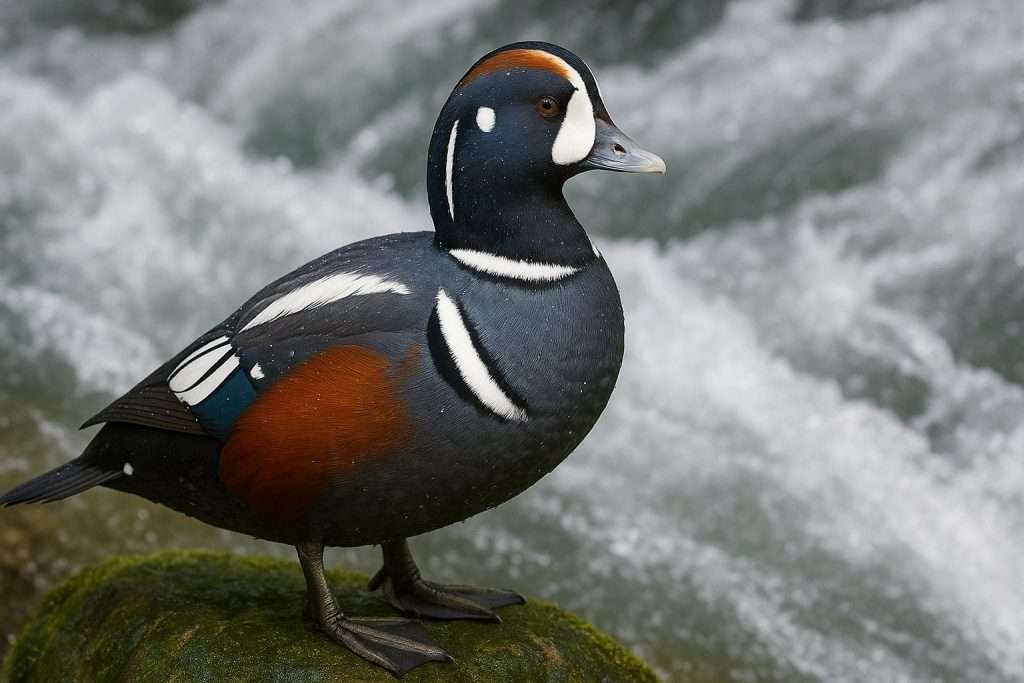
- Males during breeding season wear a costume of iridescent slate-blue with chestnut flanks, bold white markings on the head, neck, and body, and a signature white crescent in front of each eye.
- Females are more demure, with brownish-gray plumage and subtle white spots on the face, which help distinguish them from other sea ducks.
In flight, Harlequins are swift and agile, with rapid wingbeats and a streamlined shape well-suited to the turbulent environments they call home.
Habitat: Lovers of Whitewater and Surf
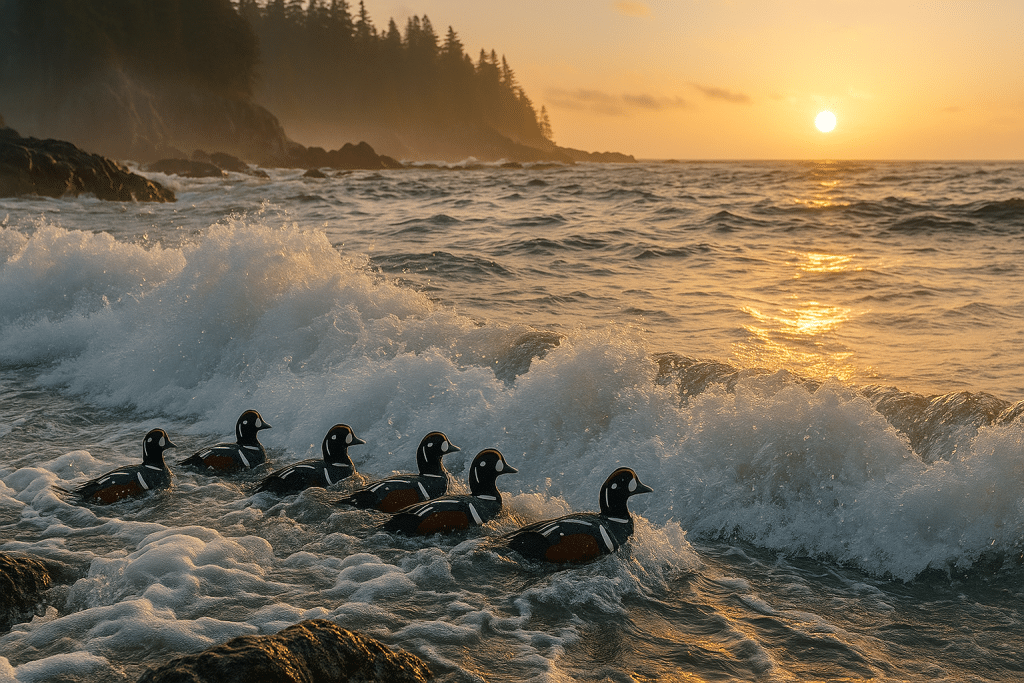
Unlike most ducks, Harlequins prefer the wild side of nature. In summer, they breed along fast-flowing mountain streams, where boulders, rapids, and waterfalls provide the oxygen-rich waters they love. In winter, they shift to rocky coastlines, often along the Pacific Northwest and the North Atlantic.
Their choice of habitat reflects their niche specialization. They are often seen diving into crashing surf or navigating river rapids with fearless agility. Their strong legs, short wings, and dense plumage make them superbly adapted to life in these high-energy environments.
Key Habitat Locations Include:
- Western North America: From Alaska down to northern California.
- Eastern North America: Coastal Newfoundland, Quebec, and parts of Maine.
- Iceland and Greenland: European populations breed here and spend the winter along their north coasts.
Behavior: Fearless and Social
Harlequin Ducks are exceptionally active, often seen clambering over slippery rocks or diving in and out of turbulent water. They are gregarious outside the breeding season, gathering in small flocks on coastal waters. Males emit a distinctive high-pitched squeaky call, unusual for ducks and part of the reason they’re sometimes called “sea mice.”
Unlike dabbling ducks that feed on the surface, Harlequins dive underwater, propelling themselves with their wings to search the riverbed or seafloor for prey.
Notable Behaviors Include:
- Diving for food: Often submerging for 10–30 seconds at a time.
- Loafing on rocks: Drying off or resting in between bouts of diving.
- Pair bonding: Males court females through complex displays involving calls, head movements, and chasing.
Diet: A Menu from the Riverbed and Seafloor
Harlequin Ducks are carnivorous and eat a diet primarily composed of aquatic invertebrates. They forage underwater using their bills to probe beneath stones and sift through gravel.
Common Food Items:
- Caddisfly and mayfly larvae
- Mollusks (like periwinkles and mussels)
- Amphipods and isopods
- Crustaceans and small marine worms
- Fish eggs (seasonally)
Their specialized diet and foraging style make them sensitive to changes in water quality and aquatic ecosystems.
Breeding: Raising Chicks in Remote Cascades
Breeding begins in late spring, once the birds return to freshwater rivers from their coastal wintering grounds. Pairs usually form during winter and migrate together to the breeding sites.
Nesting Facts:
- Nests are typically hidden under brush, in rock crevices, or among riverbank vegetation—always near fast-moving streams.
- Clutches usually contain 5–8 pale buff-colored eggs.
- Only the female incubates, for about 27–30 days, while the male often departs early to molt elsewhere.
- Ducklings are precocial, meaning they leave the nest within a day and can swim and dive immediately upon hatching. They feed themselves but are guarded by the mother.
This nesting strategy—remote, rugged, and isolated—offers some protection from predators, though storms and human disruption can still impact success.

Migration: Short and Strategic
Unlike many waterfowl that undertake long migratory journeys, Harlequin Ducks tend to migrate relatively short distances between their breeding and wintering sites. However, the terrain they cross can be rugged and inhospitable.
In the Pacific Northwest, birds may move from inland streams to the coast, while eastern populations might migrate along the St. Lawrence River corridor or fly to maritime provinces.
Banding studies and GPS tracking have revealed strong site fidelity—birds often return to the same breeding and wintering spots year after year.
Conservation Status: Caution for the East
Globally, Harlequin Ducks are not considered endangered; however, they are a species of concern in eastern North America, where their populations are smaller and more fragmented. Oil spills, pollution, hydroelectric development, and human recreation all pose threats.
Key Threats Include:
- Oil spills, particularly along the Atlantic coast, can destroy their insulating plumage and poison their food sources.
- The damming of rivers reduces habitat availability and alters water flow.
- Disturbance: Human activities near nesting sites can lead to nest abandonment.
Conservation efforts encompass protected areas, research programs, and public education initiatives. In some regions, Harlequin Ducks are protected under the Migratory Bird Treaty Act, and ongoing monitoring is in place.
Cultural Significance and Birdwatching Appeal
Among birdwatchers, Harlequin Ducks are considered a “grail species”—especially in the eastern U.S., where sightings are rare and often cause a stir. Their vibrant plumage and unusual habitats make them a favorite subject for wildlife photographers and nature lovers.
In Indigenous cultures of the Pacific Northwest, the Harlequin Duck is featured in some traditional stories, often admired for its tenacity and resilience in the face of raging rivers and treacherous rocky surf.
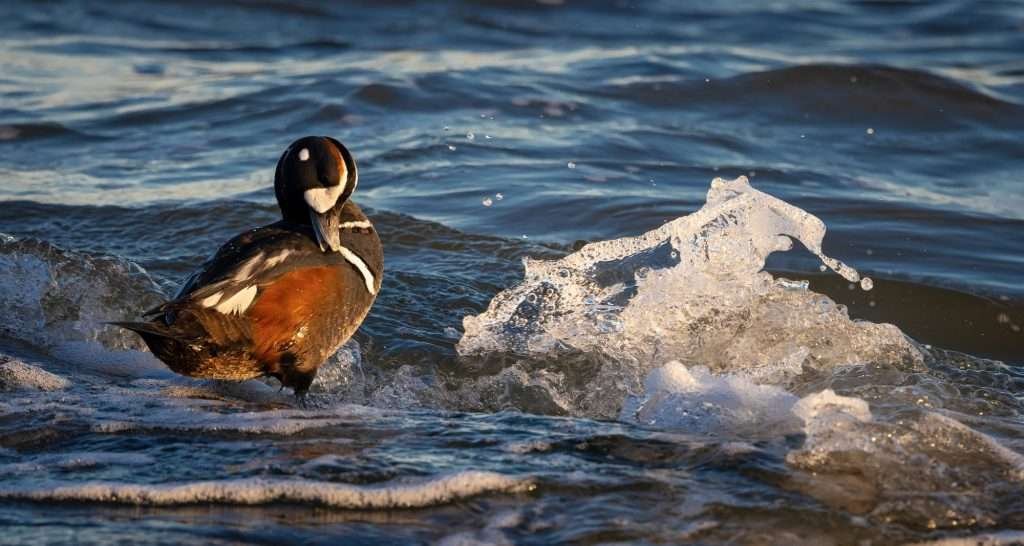
For photographers and naturalists, seeing a Harlequin Duck riding the waves or darting beneath a whitewater stream is a thrilling experience.
Fun Facts About Harlequin Ducks
- Nicknames: They’re sometimes called “lords and ladies” due to their aristocratic plumage.
- Waterproofing: Harlequin Ducks spend a considerable amount of time preening to maintain the waterproof quality of their feathers, which is crucial in cold water.
- Unique voice: The male’s high-pitched squeak is unlike any other duck species.
- Molting: After breeding, males undergo a complete molt, becoming temporarily flightless.
- Hardiness: They routinely dive in water near freezing temperatures, aided by dense down and a high metabolism.
- Range expansion: In Iceland, Harlequin Ducks are now considered a key part of the native bird fauna, possibly expanding due to milder winters.
- Longevity: Wild individuals have been recorded living up to 10–12 years.
- Rare inland sightings: Occasionally, Harlequin Ducks stray far from their usual haunts, causing excitement among inland birders.
- Dual citizen: They are one of the few North American ducks that also breed in Iceland and Greenland.
- Distinctive flight: Their low, direct flight with rapid wingbeats is unmistakable when spotted above turbulent waters.
Conclusion: A Bold Spirit in Feathered Form
The Harlequin Duck is a bird of bold contrasts, tiny yet tough, colorful yet elusive, common in the west and rare in the east. Its choice of habitat, aesthetic brilliance, and spirited nature make it a symbol of wild, untamed waterways.
Whether you find them bobbing in the Pacific surf or tucked along a hidden mountain stream, Harlequin Ducks are a true delight of North American birdlife. They remind us that beauty can thrive in the harshest places, and that even the smallest creatures can live daring lives.