
Dabbling Ducks
Green-winged Teal: Smallest Dabbling Duck
May

The Green-winged Teal is the smallest dabbling duck in North America, and it moves like it has to be somewhere. A tight flock of them can whip past you at full speed, twisting and turning together like a single duck. Blink, and you might miss the flash of green on the wing.
But paying attention means knowing what to look for. At a distance, a female Green-winged Teal can look a lot like other small brown ducks. And even when you’ve got the ID down, finding them at the right time and place makes a big difference in how good your views will be.
This guide covers everything you need to get the most out of your time with this species. You’ll learn how to identify Green-winged Teal in all plumages, understand where they go throughout the year, and find the best spots and seasons to observe and photograph them up close.
Identifying the Green-winged Teal
Male Green-winged Teal Plumage and Distinctive Features
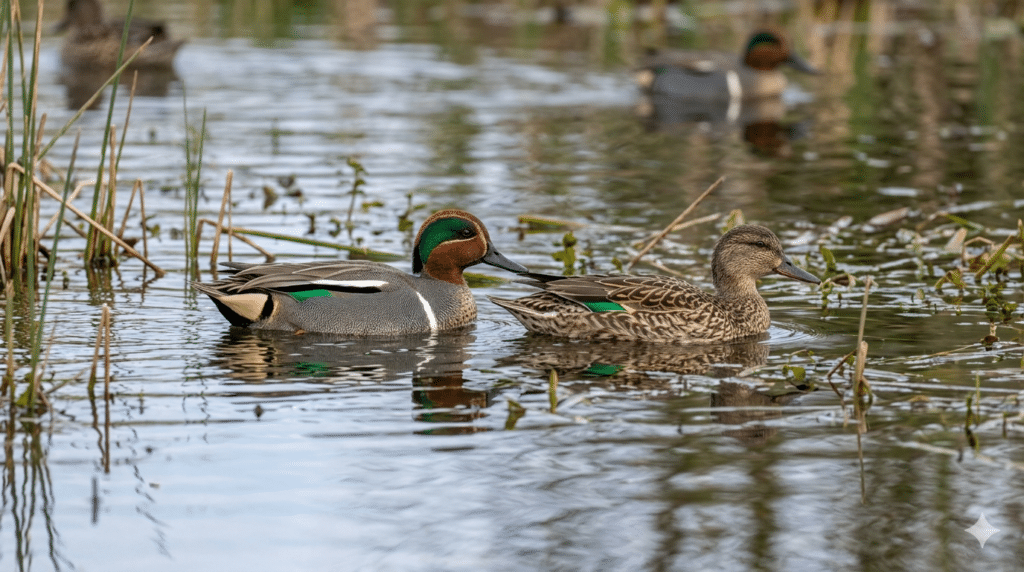
When you spot a male Green-winged Teal in breeding plumage, you’ll immediately notice something special. The chestnut-brown head catches your eye first, rich and warm like burnished copper. But the real showstopper is the metallic green ear patch that sweeps backward from the eye to the nape. This patch shimmers in the light, changing from emerald to nearly black depending on the angle.
Look for the vertical white stripe running along the side of the breast. It’s positioned right where the gray side meets the buffy breast, creating a bold contrast that’s visible even from a distance. When the bird is swimming, you might also catch sight of a horizontal white stripe near the shoulder, another distinctive marking that helps confirm your identification.
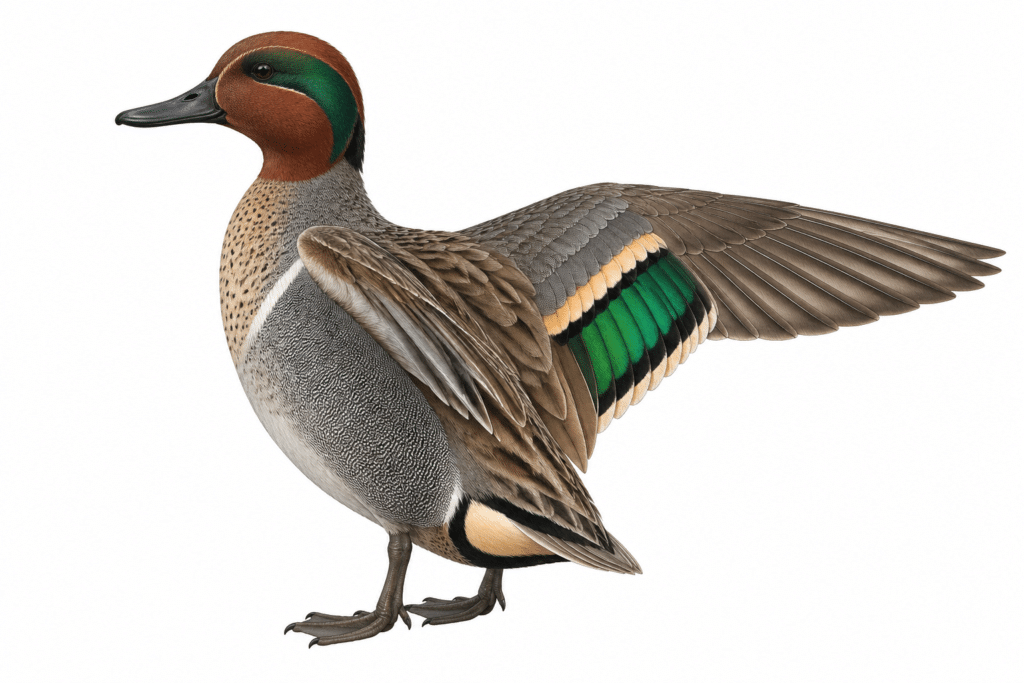
Size matters here. These are tiny ducks, averaging just 12 to 15 inches from bill to tail. Their wingspan stretches only 20 to 23 inches. They’re compact and perfectly proportioned, fitting neatly in the palm of your hand if you were lucky enough to hold one.
Female and Eclipse Plumage Identification
Female Green-winged Teals take a more understated approach to fashion. Their plumage is mottled brown overall, providing excellent camouflage in marshy vegetation where they nest. The darker crown and eyeliner add subtle definition to the face, helping you pick out features even at a distance.
Here’s the key detail: both males and females keep that diagnostic green speculum throughout the entire year. When the bird takes flight, that flash of green wing color becomes your most reliable identification marker, regardless of whether you’re looking at a breeding male, female, or eclipse plumage bird.
Eclipse males present an identification challenge during the summer months. They molt into dull, female-like plumage for a brief period, looking remarkably similar to their mates. Watch for retained gray coloring on the flanks, a subtle giveaway that you’re looking at a male in his non-breeding outfit rather than a true female.
The small bill and compact body size help separate Green-winged Teal females from other similar dabbling duck species. They’re noticeably smaller than Mallard or Gadwall hens.
Separating Green-winged Teal from Similar Species
Size comparison works wonders when you’re sorting through teal species.

The facial patterns tell different stories across species. Blue-winged and Cinnamon Teals both sport distinctive white facial crescents that immediately catch your attention. Green-winged Teals lack this marking entirely, making identification straightforward once you know what to look for.
Wing patch color provides another clear distinction. While Blue-winged Teals flash powder-blue wing patches in flight, Green-winged Teals show that characteristic green speculum. The color difference is dramatic and unmistakable.
A rare treat awaits if you encounter the European subspecies, sometimes called “Common Teal.” Instead of the vertical white breast stripe seen in North American birds, this variant displays a horizontal white stripe along the scapulars. It’s a subtle difference that excites birders lucky enough to spot one.
Behavioral Characteristics and Flight Patterns
Get ready for an airshow. Green-winged Teals are among the fastest, most agile fliers in the duck world. Their rapid wingbeats create a distinctive sound, and their swift, erratic flight patterns make them difficult to follow with binoculars.
Watch them in flocks. They fly in tight formations that twist and turn in perfect unison, like schools of fish in the sky. The coordination is mesmerizing, with dozens of birds banking and wheeling as one organism.
Their feeding behavior follows typical dabbling duck patterns. They tip up in shallow water, tails pointing skyward while they probe the muddy bottom. They never dive like scaups or goldeneyes. Shallow water is their domain.
Listen for their distinctive calls. Males produce short whistles and clicking sounds, musical and surprisingly loud for such small birds. Females respond with soft quacks, gentler and less demanding than the assertive calls of Mallard hens.
Habitat Preferences and Migration Patterns
Breeding Habitat and Range
Green-winged Teals spread out across the northern reaches of North America when breeding season arrives. You’ll find their nesting territories stretching from Alaska’s wetlands eastward through Canada and dipping into the northern U.S. states. This vast breeding range positions them as one of the most widespread small ducks on the continent.
These tiny waterfowl are picky about their nesting spots. They gravitate toward small ponds and marshy areas tucked within boreal forests and scattered across the prairie pothole region. Think of those intimate wetlands that dot the northern landscape, the kind with shallow edges and plenty of cover. The U.S. Fish and Wildlife Service notes that these habitats provide everything a nesting teal needs.
Shallow water matters enormously. Green-winged Teals require wetlands with mudflats and emergent vegetation where they can tip forward to feed without diving. The substrate needs to be soft and muddy, rich with the invertebrates and seeds that fuel their breeding efforts.
When it comes time to build a nest, females choose ground locations near water. Dense vegetation provides essential cover from predators. The nest itself sits hidden in grasses or sedges, often within a few hundred feet of the water’s edge. A typical clutch contains eight to ten creamy white eggs, though some determined females may lay up to a dozen.
Winter Distribution and Habitat Requirements
As cold weather pushes south, so do Green-winged Teals. Their winter range blankets the southern United States, Mexico, and Central America. These diminutive ducks transform from scattered breeding pairs into concentrated flocks occupying every suitable wetland they can find.
Winter habitat varies widely. They’ll use freshwater marshes one day and flooded agricultural fields the next. Shallow ponds attract them reliably. Coastal estuaries become winter homes for thousands of birds, especially along the Gulf Coast and Pacific shoreline. The common thread?
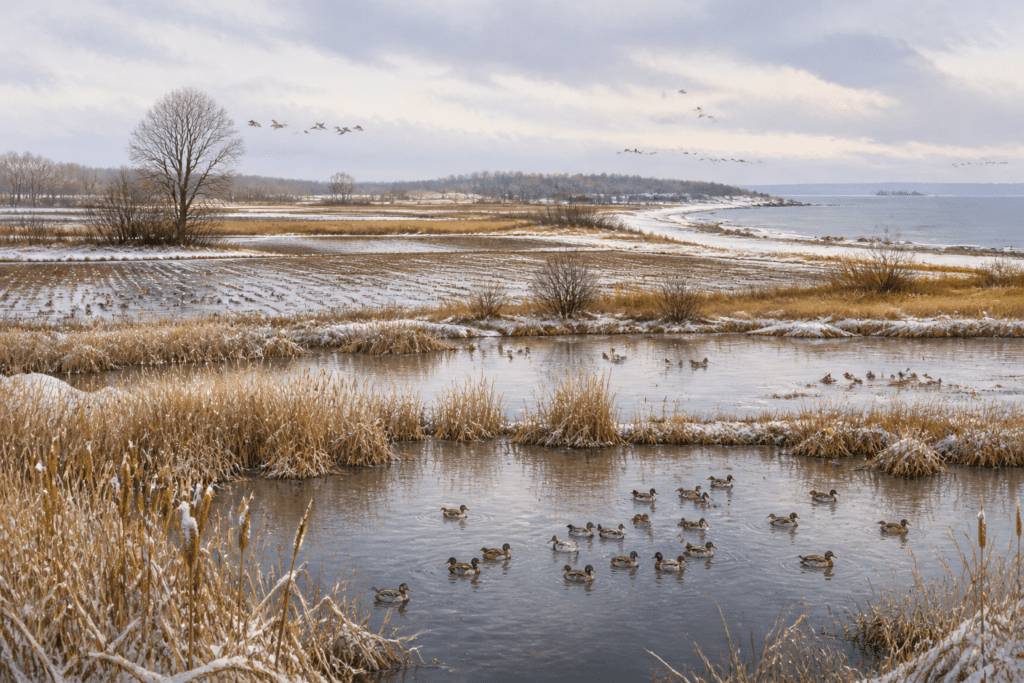
Here’s something interesting about Green-winged Teals: they’re tougher than most teal species when facing cold weather. While Blue-winged and Cinnamon Teals flee at the first hint of frost, some Green-winged Teals stick around northern areas as long as open water persists. You might spot small groups lingering in areas where warm springs or moving water prevent complete freeze-up.
Migration Timing and Routes
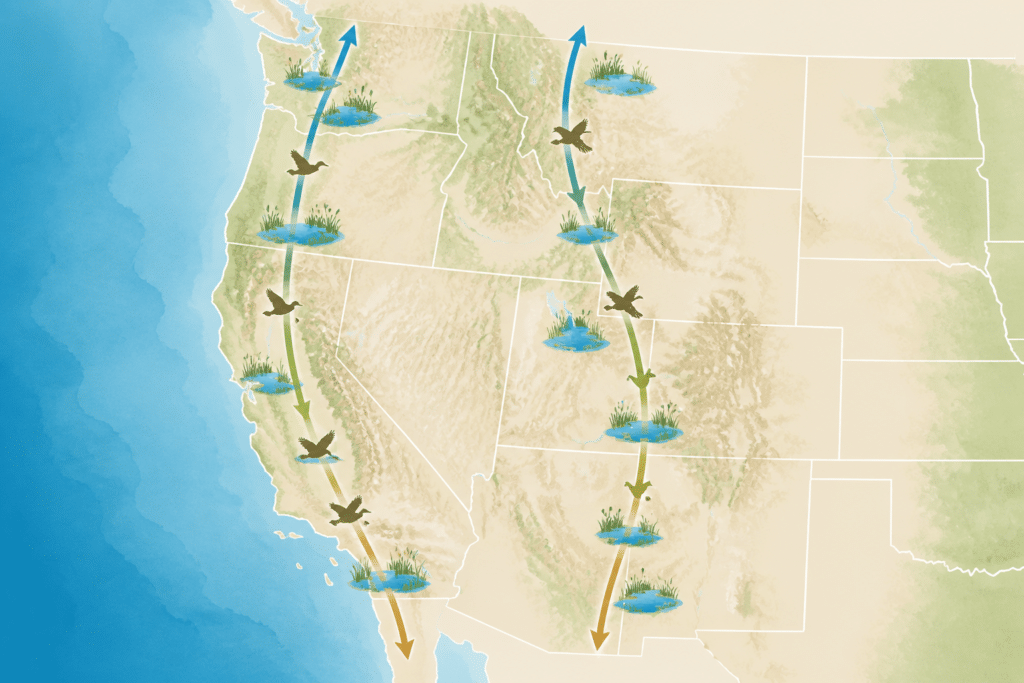
Fall migration kicks into high gear from September through November. Most birds begin their southward journey before other dabbling ducks even think about leaving. Peak movement happens in October across much of North America, when you’ll see flocks wheeling through the sky in those characteristic tight formations.
Spring brings them back between March and May. Southern populations start moving first, sometimes as early as late February when warm spells arrive. Northern breeders take their time, not arriving at Arctic and sub-Arctic breeding grounds until ice melts from their preferred wetlands.
The Northern Prairie Wildlife Research Center has tracked these birds using all four major North American flyways. The Pacific and Central flyways see the heaviest concentrations. Thousands funnel through California’s Central Valley and the prairie states during peak migration periods.
Green-winged Teals hold two notable records. They’re among the earliest dabbling ducks to head south each fall. They’re also the last to return north in spring. This extended timeline means birdwatchers enjoy a longer window to observe them during migration periods.
Daily Movement and Habitat Use Patterns
Dawn and dusk drive the daily rhythm of Green-winged Teal activity. These crepuscular feeding periods see flocks lifting off from roosting sites and heading to productive feeding areas. Midday typically finds them loafing on mudflats or tucked into protected coves.
Daily flights between roosting and feeding sites can cover surprising distances. Some flocks travel several miles each way, though most stick to shorter commutes when quality habitat sits nearby. Watch for these movements in the hour after sunrise and again before sunset.
Feeding happens in seriously shallow water. Green-winged Teals prefer water less than twelve inches deep where they can comfortably tip forward to reach the bottom. Muddy substrates hold the richest invertebrate populations and retain seeds from aquatic plants. You’ll often see dozens of birds working the same productive mudflat, their tails pointing skyward as they dabble.
These ducks live for company. The Ducks Unlimited research shows they’re highly gregarious, especially during migration and winter. Flocks can number in the hundreds or even thousands. This social behavior provides safety in numbers and helps birds locate the best feeding spots through communal knowledge.
Best Locations and Seasons for Observing Green-winged Teal
Prime Viewing Locations in North America
Finding Green-winged Teal becomes much easier when you know where they congregate during different times of the year. The National Wildlife Refuge system offers some of the most reliable viewing opportunities across its migration routes.
In New Mexico, Bosque del Apache National Wildlife Refuge stands out as a winter hotspot. Thousands of Green-winged Teal gather here from November through February, making the refuge’s carefully managed wetlands a birdwatcher’s paradise. The Sacramento National Wildlife Refuge in California’s Central Valley also draws massive concentrations during winter months, with viewing platforms positioned perfectly for observation.
The Klamath Basin refuges straddling the Oregon-California border provide exceptional viewing during both spring and fall migration.
Want to see breeding behavior? Head north. The prairie pothole region spanning North Dakota, South Dakota, Manitoba, and Saskatchewan transforms into nesting habitat from May through July. These countless small wetlands scattered across the landscape support breeding pairs in remarkable numbers, though individual birds are more dispersed than during migration periods.
Winter brings different opportunities. The coastal estuaries and wetlands of California, Texas, and the Gulf Coast states host dense concentrations from November through March. San Francisco Bay wetlands, Texas coastal refuges, and Louisiana marshes all provide consistent sightings when northern waters freeze over.
The Great Lakes region shines during migration windows. Wetlands and marshes around all five lakes bustle with activity from March through May and again from September through November as birds move along their flyways.
Optimal Viewing Seasons and Timing
Timing your visit makes all the difference. Fall migration brings peak abundance that’s hard to beat. October and November offer your highest chance of success, with large flocks moving through most regions.
Plan your day around their schedule. Early morning hours deliver the best action. Late afternoon runs a close second. Both periods offer ideal lighting for observation and photography, plus the teals are most active during these times as they feed heavily.
Winter concentrates birds predictably. December through February pushes teals into southern wetlands where open water remains available, making them easy to locate and observe for extended periods.
Spring migration from March through April offers something special. Males display their most vibrant breeding plumage during these weeks. The chestnut heads and green patches shine brightest as hormones peak before nesting season.
Photography Tips and Equipment Recommendations
Capturing quality images of these small, fast ducks requires specific gear and techniques. A telephoto lens of 400mm or longer gives you the reach needed without disturbing the flock.
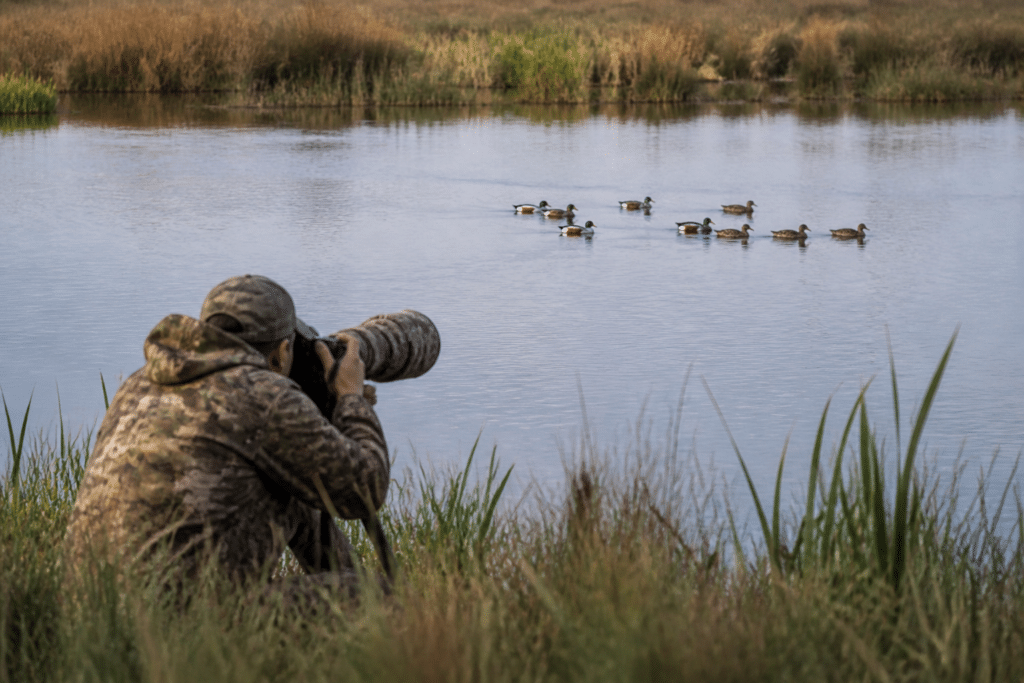
Speed matters tremendously. Set your shutter to 1/2000 second or faster. Green-winged Teal flight is incredibly rapid and erratic, so slower speeds result in blurry wings and bodies even when you think you’ve nailed the shot.
Get low. Water level positioning creates eye-level perspectives that look far more engaging than shooting down at birds from standing height. You’ll also capture beautiful reflections that add depth and interest to your compositions.
Watch the weather forecast. Overcast days actually work in your favor. Bright sun creates harsh shadows and blown highlights on white plumage, while clouds provide even, soft lighting that reveals feather details beautifully across the entire bird.
Responsible Viewing Practices and Conservation Status
Distance protects these birds. Stay at least 50 yards away to avoid unnecessarily flushing them. When teals take flight because humans approach too close, they burn precious energy reserves needed for migration and surviving cold weather.
The good news? Green-winged Teal populations remain stable at an estimated 3.5 to 4 million birds across North America. They’re not currently threatened or endangered, a testament to successful wetland conservation efforts.
You can help maintain these healthy numbers. Support organizations working to protect and restore wetlands, since habitat loss continues as the primary long-term threat to waterfowl populations. Every acre of marsh preserved helps ensure future generations can enjoy these beautiful ducks.
Spotted a banded bird? Report it to the Bird Banding Laboratory. Your observation contributes valuable data to migration research, helping scientists understand movement patterns and population dynamics across the continent. Meet the Mallard Duck: North America’s Most Familiar Duck
Meet the Mallard Duck North America’s Most Familiar DuckMeet the Mallard Duck North America’s Most Familiar Duck