Dabbling Ducks
Mallard Ducks: The Ultimate Guide
May

Introduction
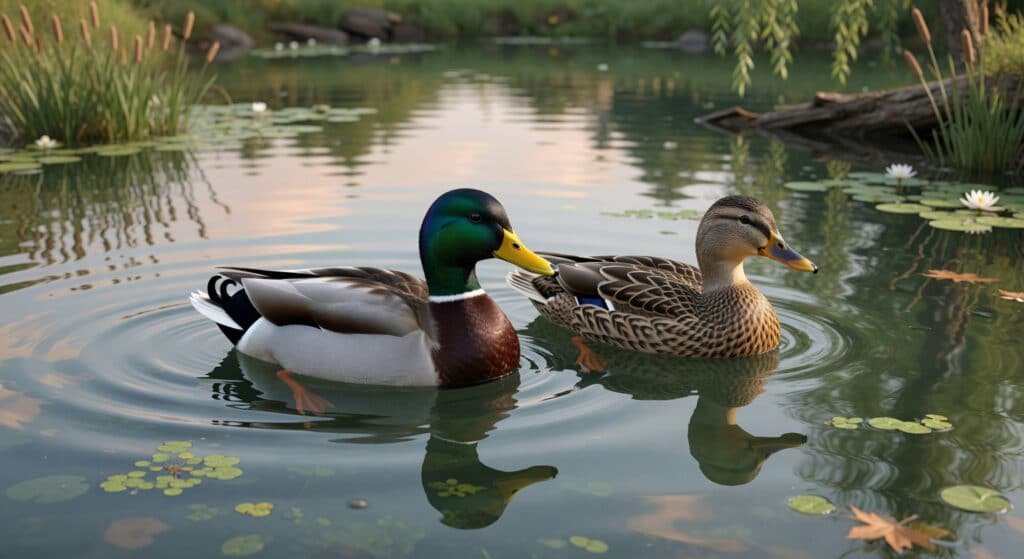
Mallard ducks are one of the most recognizable and widespread ducks in the world. Found across North America, Europe, Asia, and even parts of New Zealand and Australia, the Mallard is often the first duck people learn to identify. Its familiar green-headed males, loud quacks, and adaptability to parks, ponds, rivers, and wetlands have made it an icon of the waterfowl world.
Despite being common, Mallards are fascinating birds with complex behaviors, impressive migration patterns, and an important role in wetland ecosystems. They are also the ancestors of nearly all domestic duck breeds seen on farms today.
Whether you are a birdwatcher, photographer, nature enthusiast, or simply curious about the ducks at your local pond, this guide will help you better understand the remarkable Mallard Duck.
Quick Facts
| Category | Information |
|---|---|
| Common Name | Mallard Duck |
| Scientific Name | Anas platyrhynchos |
| Family | Anatidae |
| Type | Dabbling Duck |
| Length | 20–26 inches |
| Wingspan | 32–39 inches |
| Weight | 1.5–3.5 pounds |
| Lifespan | 5–10 years in the wild |
| Habitat | Wetlands, ponds, lakes, rivers, marshes |
| Diet | Omnivorous |
| Migration | Partial migrant |
| Conservation Status | Least Concern |
Identification Guide
Male Mallard Appearance
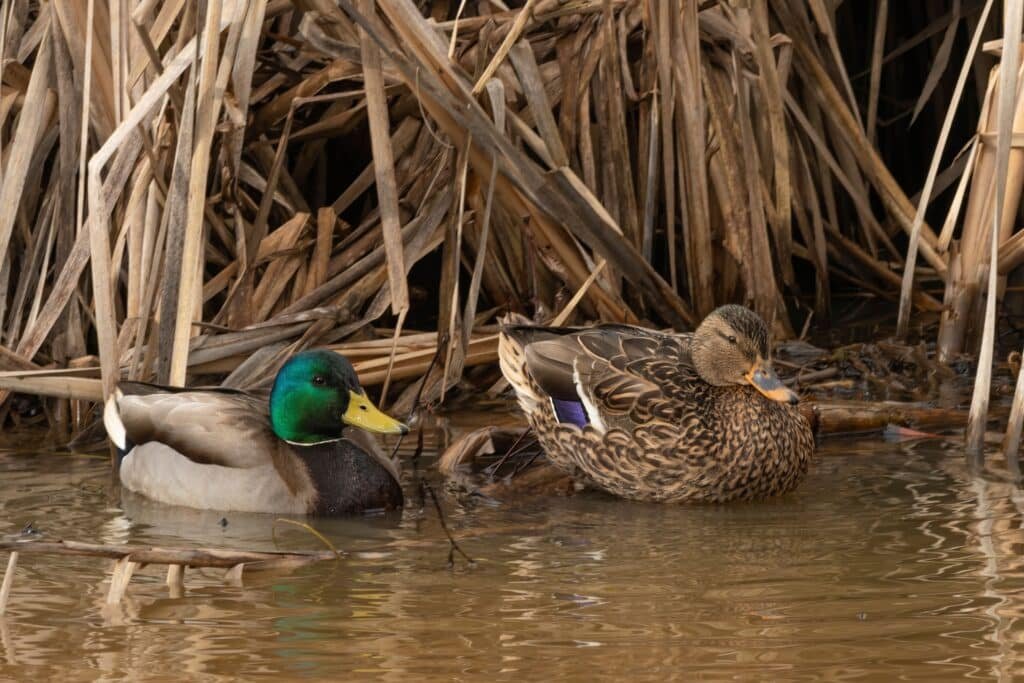
Male Mallard ducks, known as drakes, are among the easiest ducks to recognize. During the breeding season, they display vibrant and colorful plumage designed to attract females.
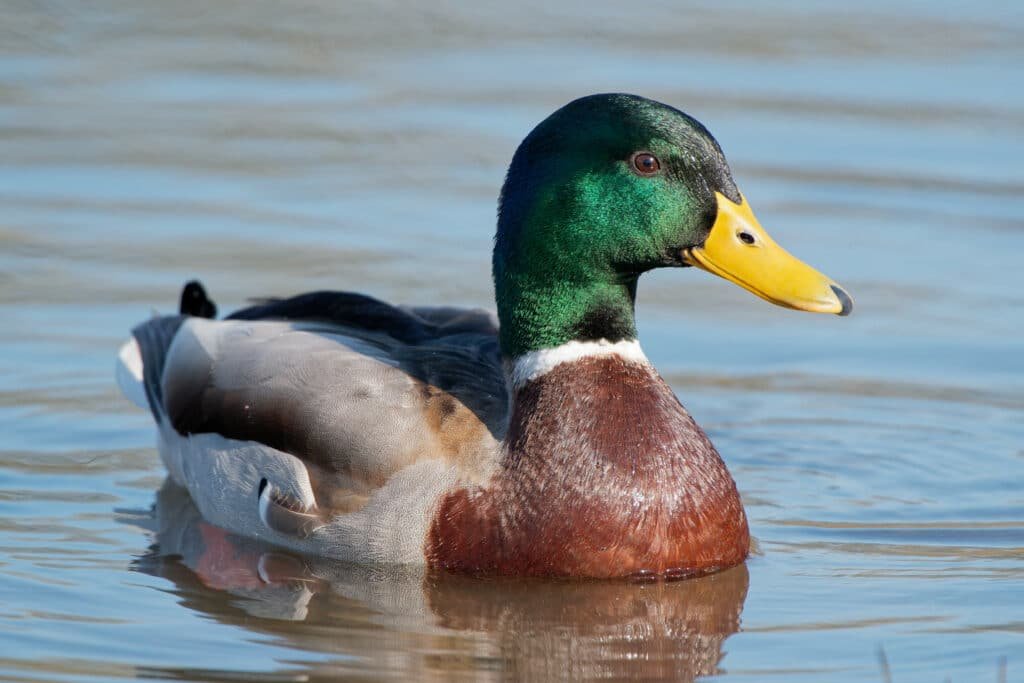
Key features include:
- Glossy emerald-green head
- Bright yellow bill
- White neck ring
- Rich chestnut-brown chest
- Gray body
- Black tail with curled black tail feathers
- Bright orange legs and feet
One of the most noticeable field marks is the blue-purple wing patch called a “speculum,” bordered with white.
The male’s colorful appearance is most vivid during fall, winter, and spring breeding months.
Female Mallard Appearance
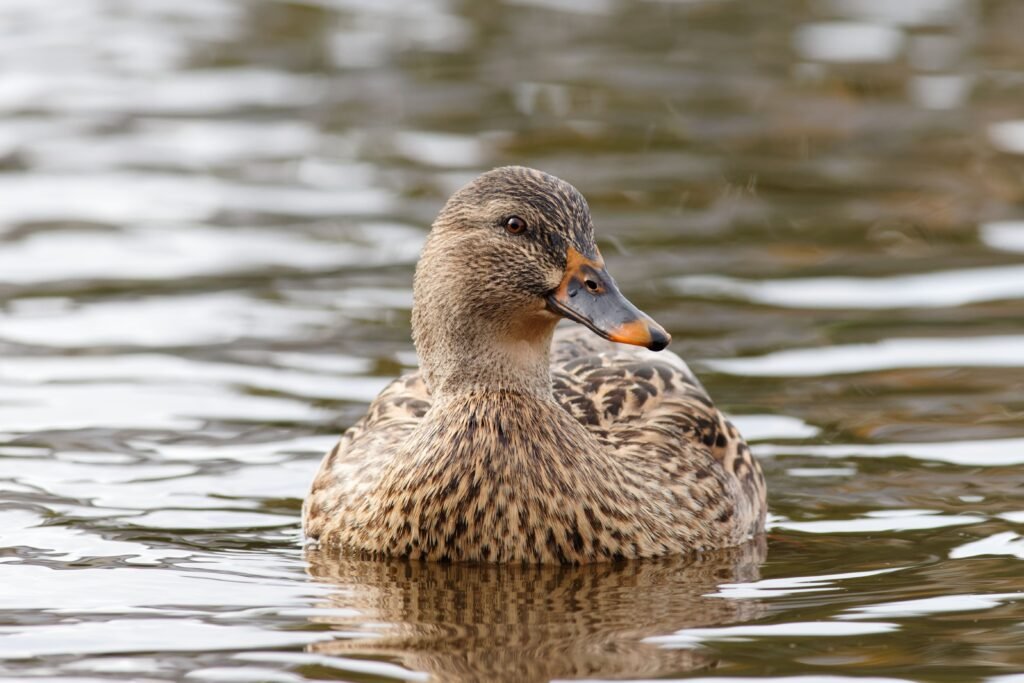
Female Mallard ducks are more camouflaged than males. Their mottled brown feathers help them blend into reeds and grasses while nesting.
Key features include:
- Mottled tan and brown body
- Orange-and-brown bill
- Dark eye stripe
- Blue-purple wing speculum
- Orange legs and feet
Females may appear plain at first glance, but their feather patterns are beautifully detailed up close.
Juvenile Mallards
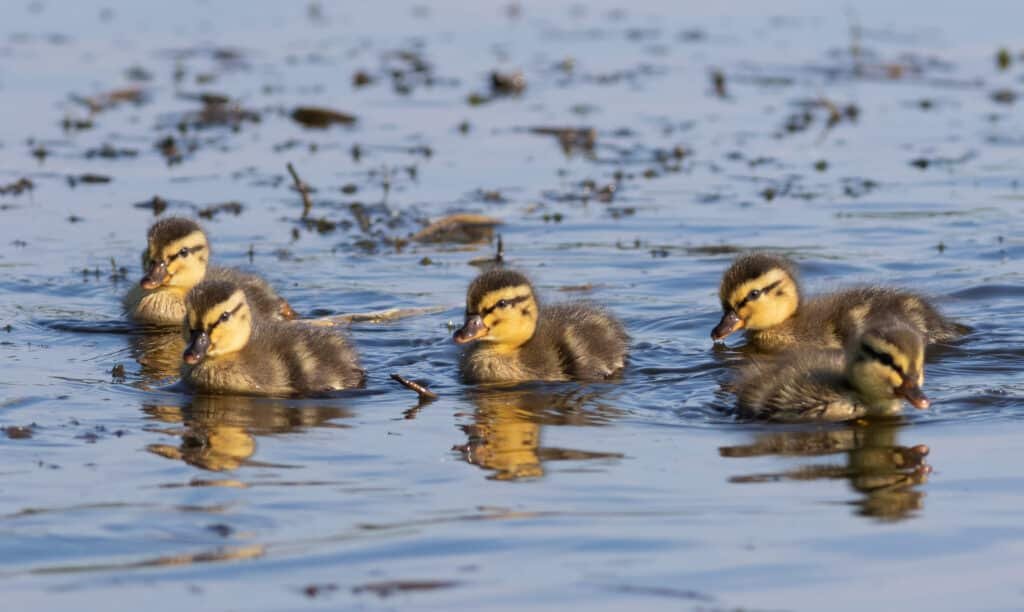
Young Mallards resemble females until males begin developing their adult breeding plumage. Juveniles often have duller feathers and less distinct markings.
By late summer and fall, young males begin showing hints of green on their heads.
Mallards in Flight
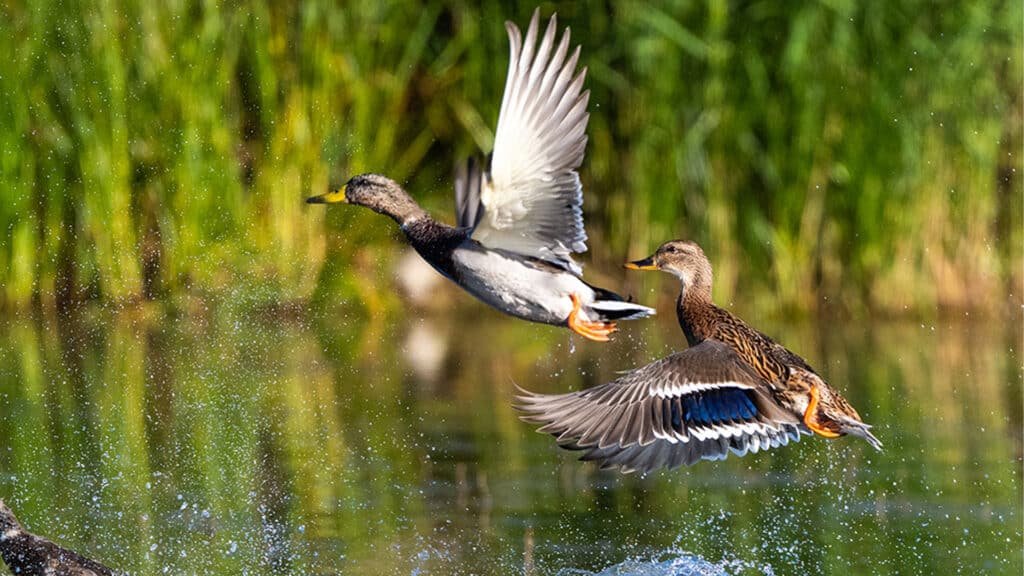
Mallards are strong, fast fliers capable of quick takeoffs directly from the water.
In flight, look for:
- Rapid wingbeats
- Blue wing patch bordered in white
- Long, slightly rounded wings
- Distinctive silhouette with broad body
They often travel in small flocks but can gather in huge numbers during migration.
Habitat and Range
Preferred Habitat
Mallard ducks are highly adaptable ducks that thrive in many environments.
Common habitats include:
- Marshes
- Wetlands
- Lakes
- Farm ponds
- Slow-moving rivers
- Flooded fields
- City parks
- Coastal estuaries
Their adaptability is one reason they are so widespread.
Unlike some duck species that require remote wilderness habitats, Mallards are comfortable living near people and often thrive in urban settings.
Geographic Range
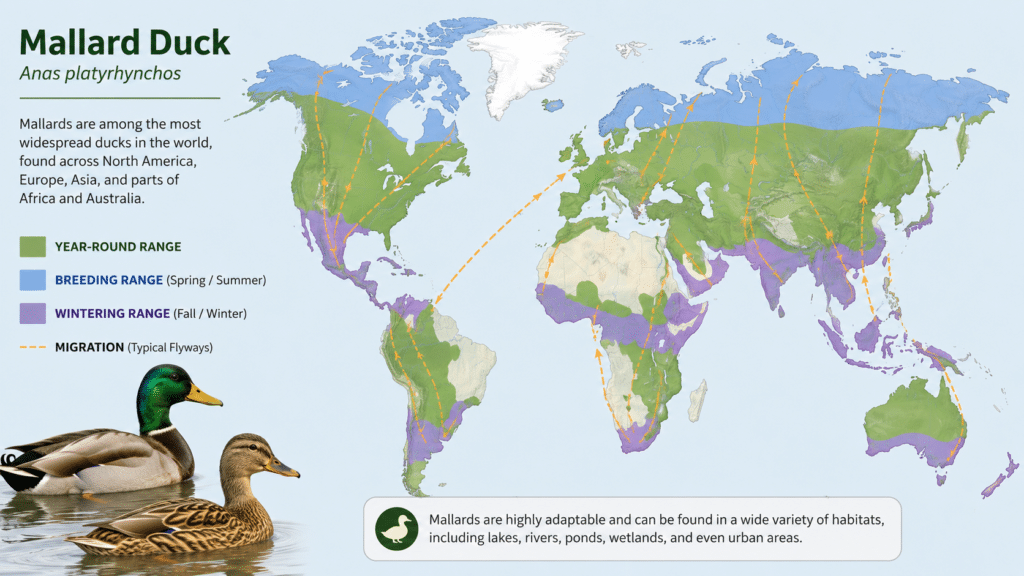
Mallard ducks are found across much of the Northern Hemisphere.
In North America, they breed throughout:
- Canada
- Alaska
- the northern United States
During winter, many migrate south into:
- the southern United States
- Mexico
- Central America
Some Mallards remain year-round in milder climates where open water is available.
Mallards are also native to Europe and Asia and have been introduced to other parts of the world.
Behavior
Feeding Habits
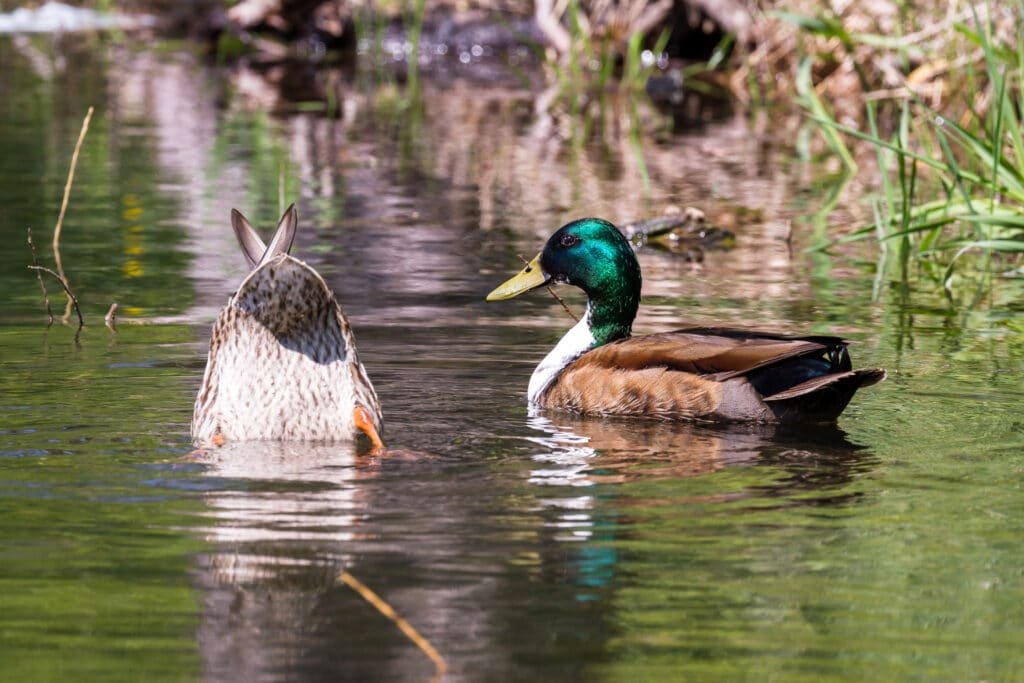
Mallards are dabbling ducks, meaning they feed primarily at the water’s surface rather than diving underwater.
Common feeding behaviors include:
- Tipping forward in shallow water
- Grazing on land
- Sifting mud with their bills
Their diet includes:
- aquatic plants
- seeds
- grasses
- insects
- snails
- crustaceans
- small fish
Mallards are opportunistic feeders and adapt easily to available food sources.
Social Behavior
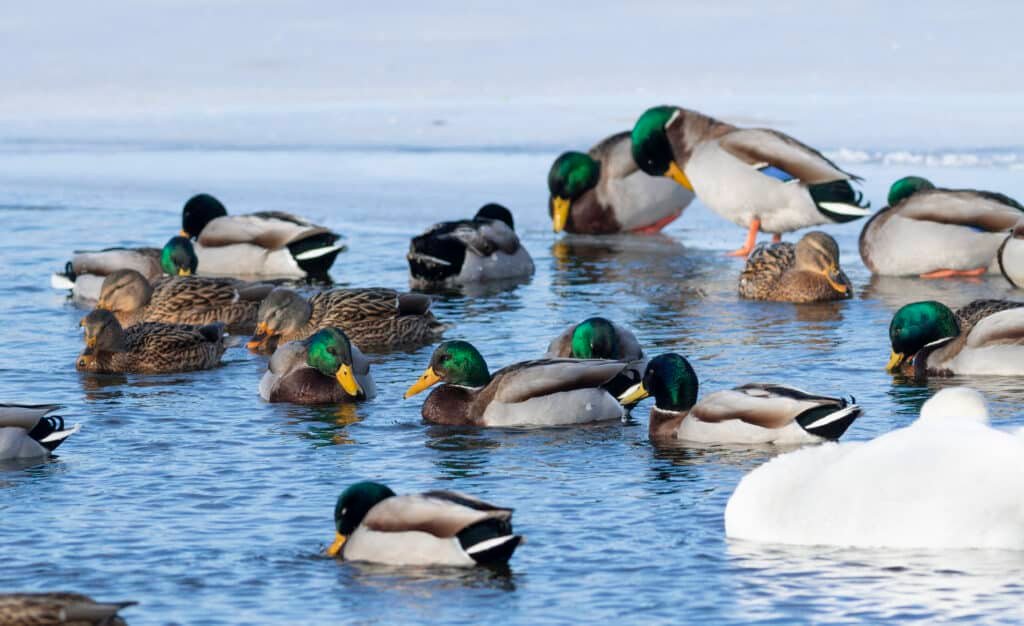
Mallard ducks are social birds and are often seen in pairs or groups.
Outside the breeding season, they may gather in large flocks called “rafts.”
Males can become aggressive during mating season, especially when competing for females.
Mallards also interact heavily through body language, head bobbing, wing flapping, and vocalizations.
Vocalizations
The Mallard is famous for its classic “quack.”
Interestingly:
- Females produce the loud, familiar quack
- Males make softer rasping or wheezing sounds
Females use calls to:
- communicate with ducklings
- warn of danger
- maintain contact with mates
Ducklings begin vocalizing shortly after hatching.
Migration
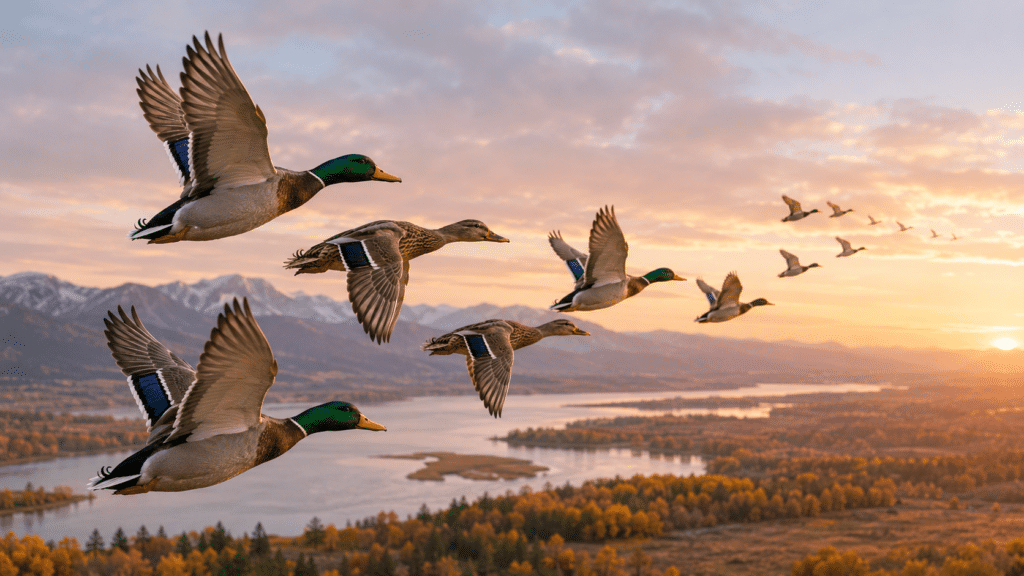
Mallards are flexible migrants.
Northern populations migrate south when lakes and wetlands freeze, while southern populations may remain in the same area year-round.
Migration typically occurs:
- southward in the fall
- northward in spring
Mallards often migrate at night and can travel hundreds of miles between resting areas.
Breeding and Nesting
Courtship Displays
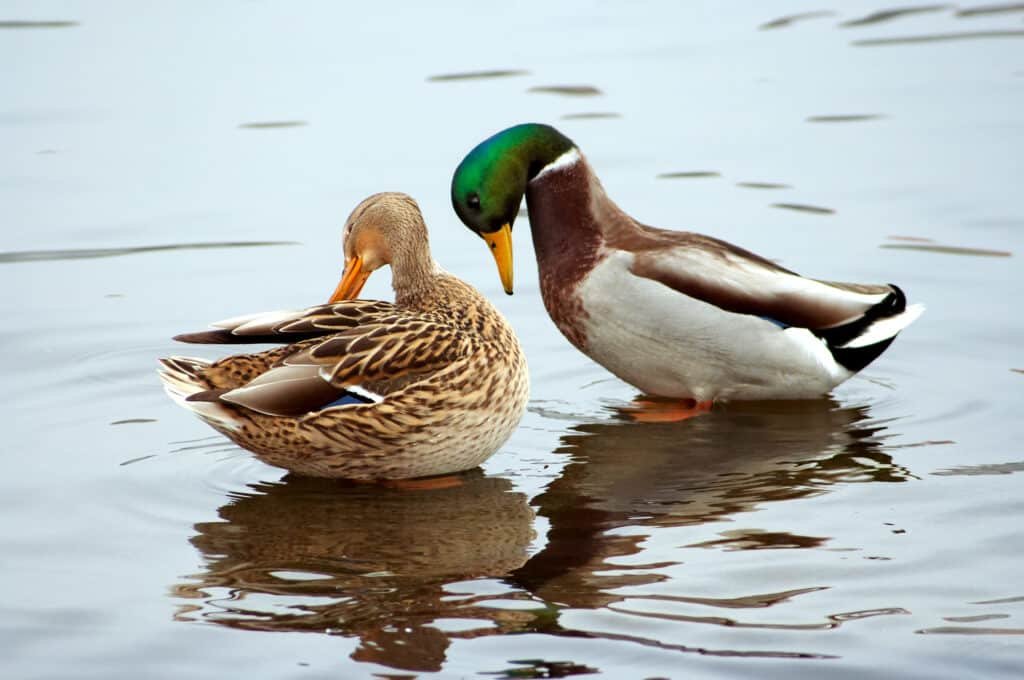
Mallard courtship is surprisingly elaborate.
Males perform displays that include:
- head pumping
- whistle calls
- tail shaking
- wing flapping
Females choose mates based on strength, health, and display quality.
Pair bonds usually form during winter.
Nesting Habits
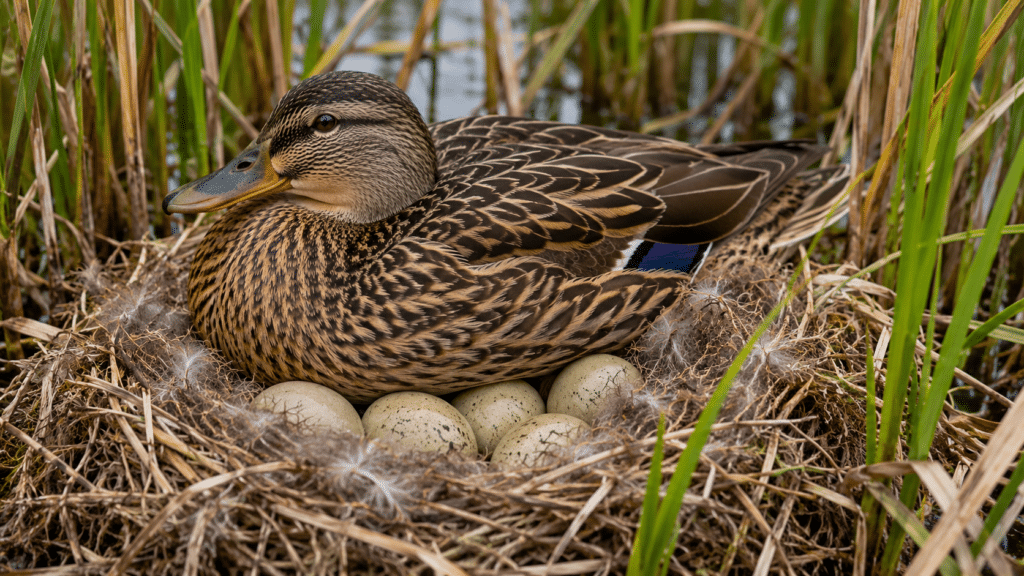
Female Mallards build nests on the ground, usually hidden in:
- tall grasses
- reeds
- shrubs
- agricultural fields
The nest is lined with soft down feathers plucked from the female’s chest.
A typical clutch contains:
- 8–13 eggs
The female alone incubates the eggs for about 26–30 days.
Eggs and Ducklings
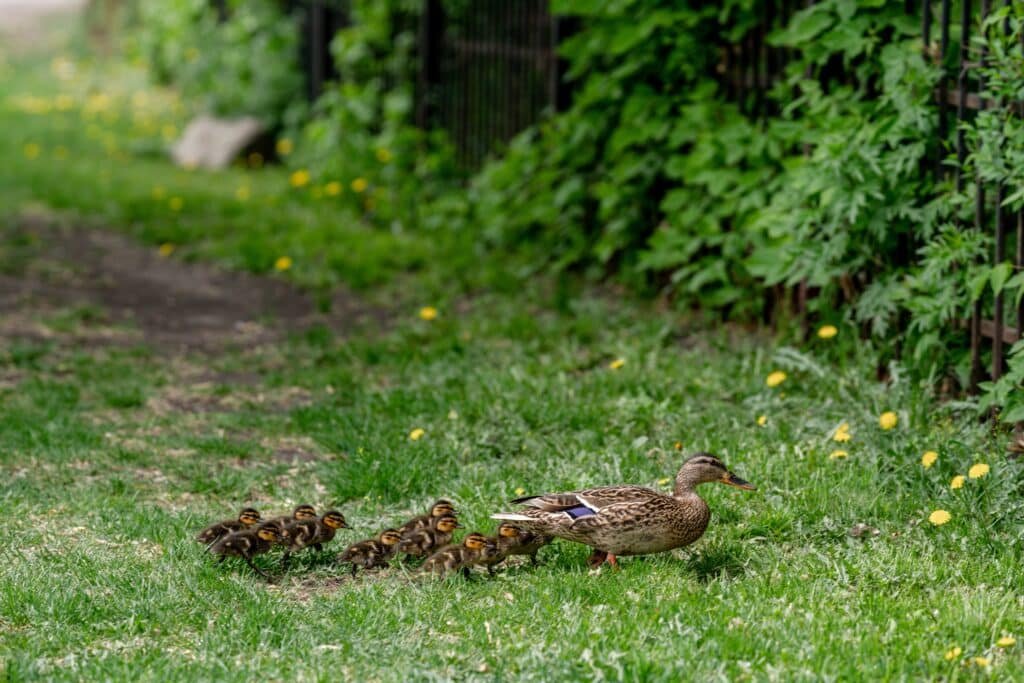
Mallard ducklings are precocial, meaning they hatch covered in down and can walk within hours.
Soon after hatching:
- The mother leads them to water.
- Ducklings begin feeding themselves.
- They stay close to the mother for protection.
Ducklings grow rapidly and usually fledge (acquire the feathers necessary for flight) within 7–9 weeks.
Sadly, many ducklings fall prey to predators before adulthood.
Diet
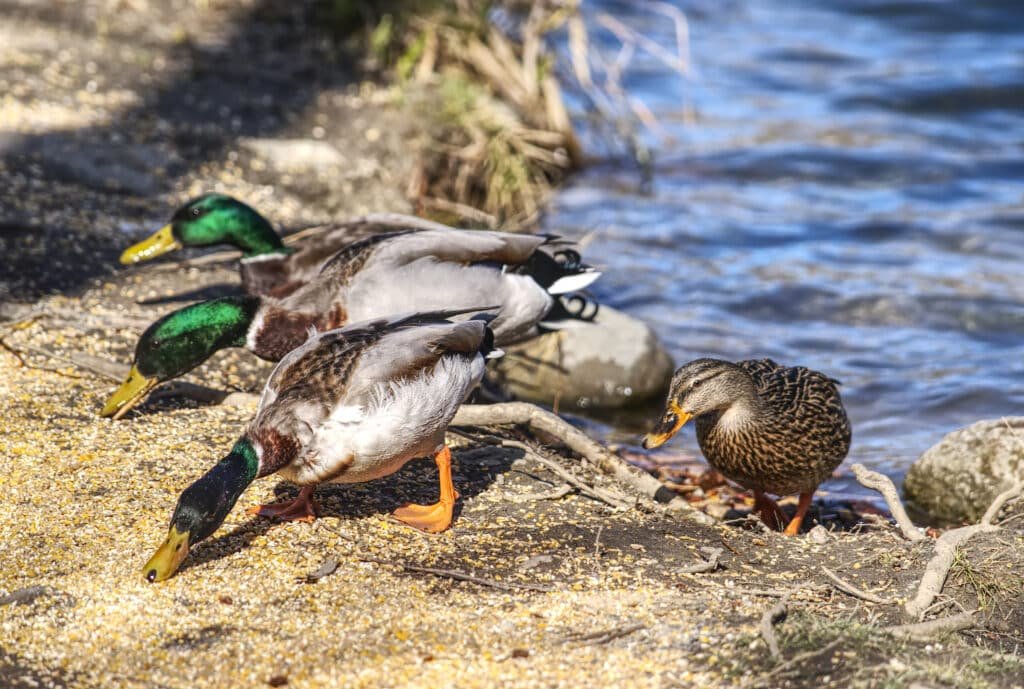
Mallards are omnivores with a highly varied diet.
Plant Foods
They commonly eat:
- pondweed
- duckweed
- sedges
- wild rice
- acorns
- seeds
- grasses
Animal Foods
Protein becomes especially important during the breeding season.
Mallards consume:
- insects
- worms
- snails
- tadpoles
- crustaceans
- small fish
Young ducklings rely heavily on insects during early growth.
Predators and Threats
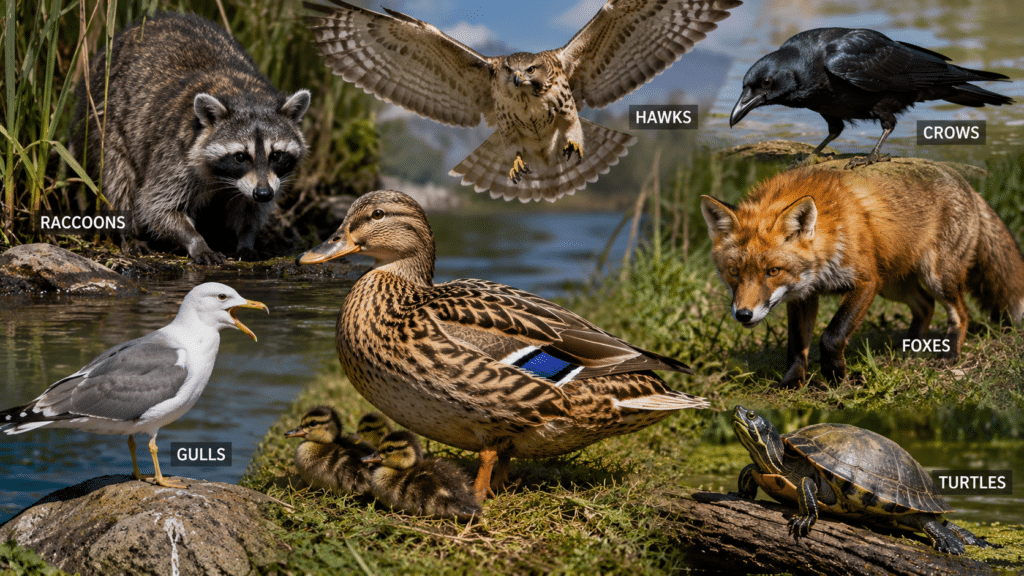
Mallards face many natural predators.
Common Predators
Eggs and ducklings are vulnerable to:
- raccoons
- foxes
- snapping turtles
- gulls
- crows
- hawks
Adult Mallards may be hunted by:
- coyotes
- eagles
- owls
Human-Related Threats
Major threats include:
- wetland destruction
- pollution
- lead poisoning
- habitat fragmentation
Urban ducks may also face dangers from traffic and domestic pets.
Conservation Status
The Mallard is currently classified as a species of “Least Concern” due to its large and stable population.
Organizations like Ducks Unlimited and Audubon work to protect wetland habitats that support Mallards and countless other waterfowl species.
Conservation efforts include:
- wetland restoration
- habitat management
- water quality protection
- responsible hunting regulations
Healthy wetlands are essential not only for ducks but also for fish, amphibians, and many other species.
Interesting Facts About Mallard Ducks
Mallards Are the Ancestors of Domestic Ducks
Most farm ducks descended from the wild Mallard.
They Can Sleep With One Eye Open
Mallards can rest while remaining alert to predators.
Their Feathers Are Waterproof
Special oils spread during preening help keep feathers dry and insulated.
Mallard Ducks Hybridize Easily
Mallards sometimes breed with other duck species, creating unusual hybrids.
Ducklings Imprint on Their Mother
Young ducklings quickly learn to follow the first moving object they recognize as a parent.
Duck Watching Tips
Best Time to Observe Mallards
Early morning and late afternoon are often the best times.
During migration seasons, wetlands can host massive flocks.
Best Locations
Look for Mallards in:
- city ponds
- marshes
- wildlife refuges
- rivers
- flooded fields
They are one of the easiest ducks for beginners to find.
Photography Tips
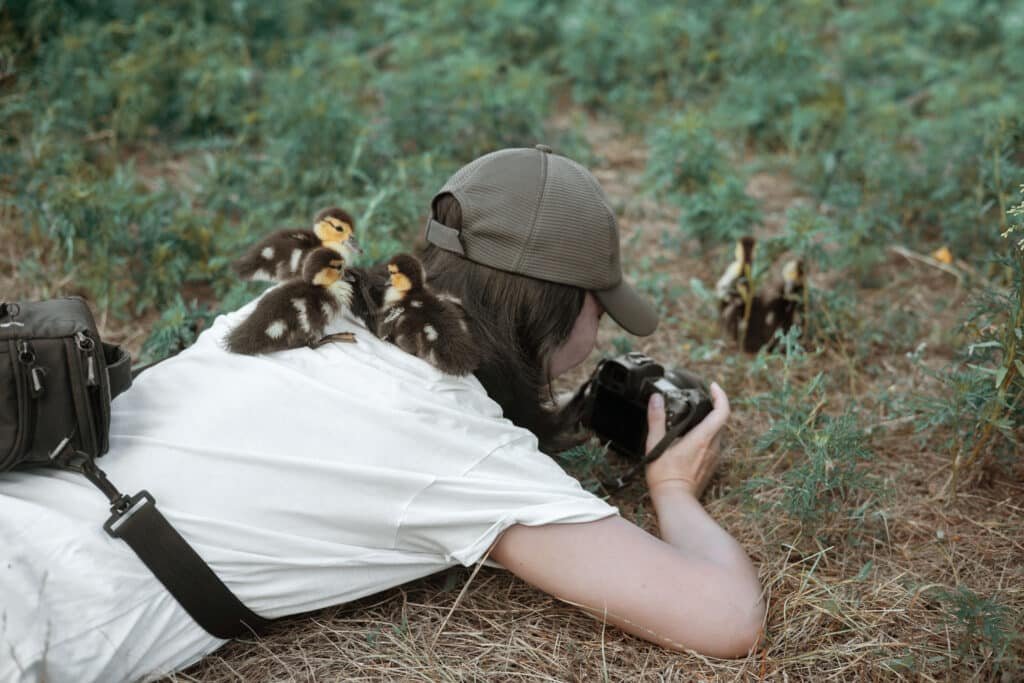
For better duck photography:
- Use soft morning light
- Stay low to the ground
- Move slowly
- Focus on eye detail
- Photograph during calm water conditions
Frequently Asked Questions
Are Mallard Ducks friendly?
Mallards living in parks may become comfortable around humans, but they are still wild animals and should not be handled.
Can Mallard Ducks dive underwater?
Mallards are dabbling ducks, not diving ducks. They mainly feed at the surface or by tipping forward in shallow water.
What do Mallard Ducks eat in city parks?
They often eat seeds, insects, aquatic plants, and human-provided foods, though bread is unhealthy for ducks and should be avoided.
Do Mallard Ducks mate for life?
No. Mallards form seasonal pair bonds that usually last for one breeding season.
Why are male Mallard Ducks more colorful?
Bright breeding plumage helps males attract females during courtship.
Final Thoughts
The Mallard Duck is far more than a common pond bird. Its adaptability, beauty, intelligence, and widespread presence make it one of the most fascinating waterfowl species in the world.
From quiet marshes to busy city parks, Mallards continue to thrive in a changing world while offering people an easy and rewarding introduction to birdwatching and wetland wildlife.
The next time you see a Mallard gliding across the water, take a closer look. You may discover there is much more to this familiar duck than you ever realized.