
Dabbling Ducks
The Elegant Nomad: The Northern Pintail Duck
Aug

Introduction
Graceful, sleek, and unmistakable in silhouette, the Northern Pintail duck (Anas acuta) is one of the most elegant members of the waterfowl family. Known for its long, slender neck and pointed tail feathers that give the species its name, the Northern Pintail is a globally distributed duck that enchants birdwatchers, hunters, and nature lovers alike. Found across the Northern Hemisphere, from North America to Eurasia, the pintail is as much a symbol of avian beauty as it is of ecological resilience.
In this blog post, we’ll take a deep dive into the biology, behavior, migration, habitat, and conservation status of this magnificent duck. Whether you’re a birding enthusiast or someone just discovering the wonders of waterfowl, the Northern Pintail’s story is one of survival, adaptation, and aesthetic marvel.
Taxonomy and Identification
- Scientific Name: Anas acuta
- Family: Anatidae
- Order: Anseriformes
- Length: 20–30 inches (males are generally larger)
- Wingspan: 34 inches on average
- Weight: 1–3 pounds
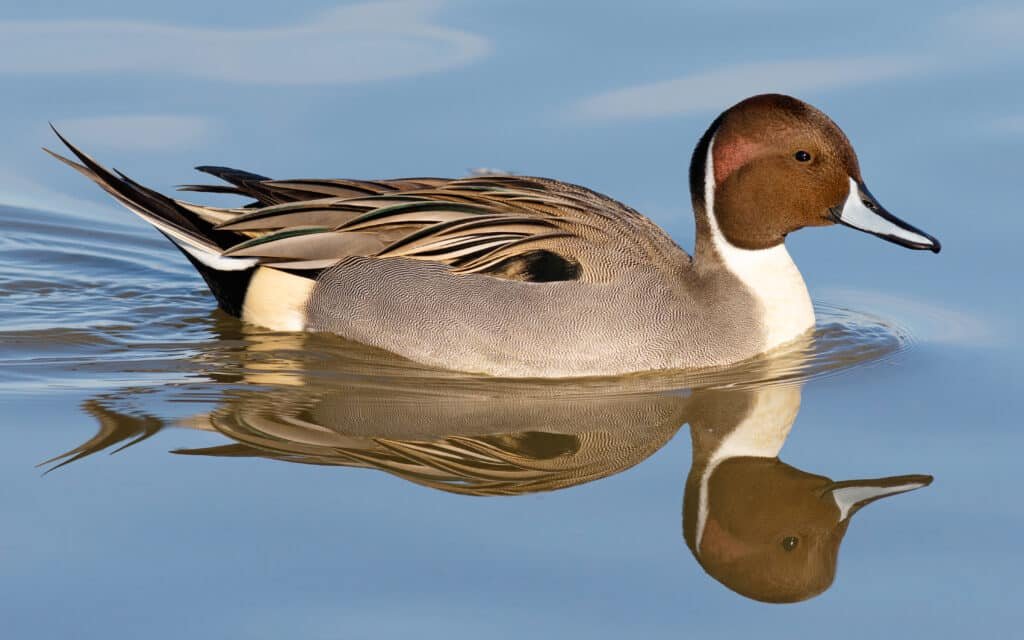
The male Northern Pintail is particularly striking: a chocolate-brown head, white neck stripe that tapers into a white chest, and long, central black tail feathers that give the duck its “pintail” name. The body is predominantly gray with intricate vermiculation (fine, wavy lines), and a shimmering iridescent green speculum (the secondary wing patch) visible during flight.
Females, on the other hand, are more subtly colored. Their mottled brown plumage provides effective camouflage, especially during the nesting season. However, they maintain the same streamlined shape and grace as their male counterparts.
Habitat and Range
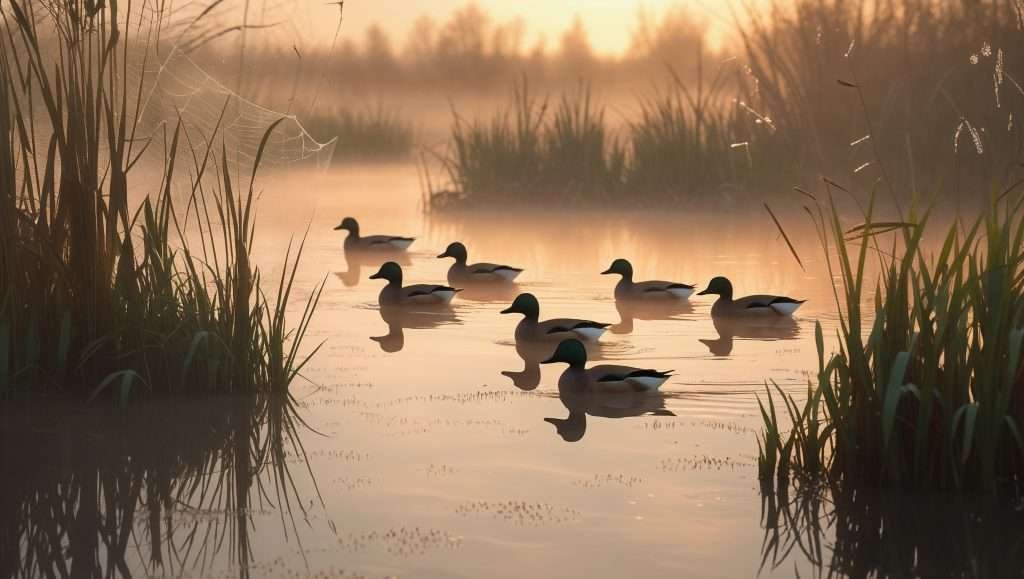
Northern Pintails are highly migratory ducks. They breed in the northern regions of North America, Europe, and Asia — especially in open wetlands, tundra, and prairie potholes. During the winter months, they migrate to warmer climates, including the southern U.S., Central America, Africa, the Indian subcontinent, and Southeast Asia.
They prefer shallow freshwater wetlands, coastal estuaries, flooded rice fields, and even agricultural fields. Their slender build and long neck allow them to forage in deeper waters than many dabbling ducks.
Feeding Behavior and Diet
As dabbling ducks, pintails feed primarily at or near the water’s surface, tipping forward to reach aquatic vegetation below the surface. However, their long necks give them an edge over other dabblers, enabling them to access food in deeper waters.
Their diet includes:
- Seeds and aquatic plants
- Grains (especially in agricultural areas)
- Aquatic invertebrates and insects
- Crustaceans and small snails (especially in spring)
Interestingly, during migration and in winter, Northern Pintails rely heavily on agricultural lands — feeding on leftover grains in harvested rice and wheat fields. This dietary flexibility makes them incredibly adaptive but also vulnerable to habitat loss.
Breeding and Nesting
Northern Pintails nest on the ground — usually far from water — in shallow depressions lined with grasses and down feathers. The female typically lays 6 to 12 eggs and incubates them for about 22 to 24 days. The male often departs soon after incubation begins, leaving the female to raise the brood alone.
Ducklings hatch precocial — meaning they can walk and feed themselves shortly after hatching. The mother leads them to water where they feed on aquatic invertebrates to fuel their rapid growth.
However, nesting far from water comes with risks. Predation by foxes, raccoons, and skunks is common, and agricultural development has significantly reduced suitable nesting grounds in many regions.
Migration Marvel
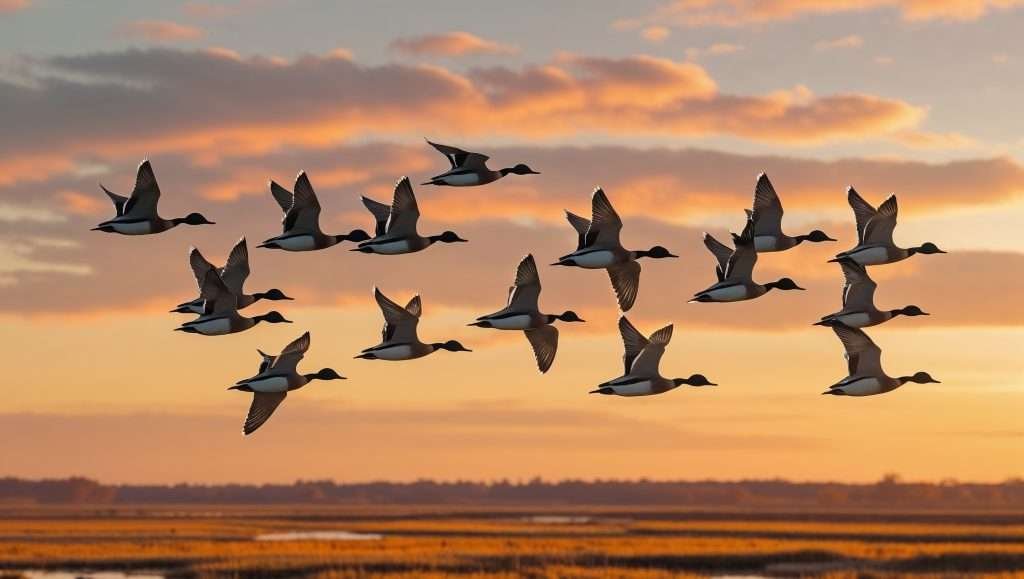
Few ducks embody the spirit of migration like the Northern Pintail. These birds can travel thousands of miles between their breeding and wintering grounds. In North America, birds from as far as Alaska migrate down to Mexico and Central America. In Eurasia, they move from Siberia to India, Southeast Asia, and even parts of Africa.
Their migration routes often overlap with major flyways — the Pacific, Central, Mississippi, and Atlantic flyways in North America — making them a familiar sight to birdwatchers throughout the continent during migration seasons.
Pintails in Culture and Conservation
The Northern Pintail holds significant cultural value, especially among indigenous communities and waterfowl hunters. Their fast, agile flight and challenging behavior make them a prized game bird.
However, over the past few decades, the global pintail population has declined, primarily due to:
- Habitat loss, especially the conversion of wetlands to agriculture
- Climate change, which alters wetland hydrology
- Hunting pressure, particularly in areas with lax regulations
- Predation and nest disturbance from increased human activity
According to the North American Breeding Bird Survey and the U.S. Fish and Wildlife Service, pintail numbers have declined significantly since the 1950s. Conservation efforts now focus on wetland restoration, better agricultural management, and international cooperation to protect migratory flyways.
Organizations like Ducks Unlimited, The Audubon Society, and BirdLife International play key roles in monitoring populations and advocating for habitat protection.
How to Spot a Northern Pintail
Whether you’re a seasoned birder or a curious beginner, spotting a Northern Pintail is a rewarding experience. Here are some tips:
- Look in open wetlands during migration seasons (spring and fall), especially in national wildlife refuges and coastal estuaries.
- Listen for soft, high-pitched whistles, especially from males during courtship.
- Look for their distinctive flight pattern — swift and straight, with rapid wingbeats and pointed tail feathers visible even in motion.
- In the winter, check rice fields and flooded agricultural land — especially in California’s Central Valley, one of their favorite wintering areas.
Fun Facts
- The pintail’s scientific name, Anas acuta, comes from Latin — acuta meaning “sharp” or “pointed,” referring to its tail.
- Pintails are one of the earliest migratory ducks to arrive on northern breeding grounds in spring.
- Unlike many other duck species, pintails can nest up to a mile away from water, relying on their mobility to guide ducklings once hatched.
- They’re known for their monogamous breeding bonds, usually selecting a new mate each year.
- In Eurasia, they sometimes hybridize with other duck species, including mallards and wigeons.